
10 Best Things to Do at the Polynesian Cultural Center on the North Shore of Oʻahu, Hawaiʻi
The Polynesian Cultural Center in Lāʻie on the North Shore of Oʻahu is an attraction unlike any other across Hawaiʻi, as visitors have the opportunity to personally experience the cultures of six island archipelagos across the Pacific, demonstrated and performed not by actors, but by those who actually come from Tahiti, Samoa, Tonga, and more!
That said, there is a lot going on at the Polynesian Cultural Center, and it’s very understandable if it all feels overwhelming and too much to try to see in one day.
This is why I wanted to create this list, because between the shows, the exhibits, the islands, and the lūʻaus, prioritizing the best of everything the Polynesian Cultural Center has to offer can be a challenge.
For this reason, I created the list below to help show the best of everything there is to see and do, and to break down the best way to spend a day at the Polynesian Cultural Center, as visiting from the time the doors open to the Hā: Breath of Life show when the doors close is a bit too much for most visitors.
Should I Do a Guided Tour?
The Polynesian Cultural Center offers private, group, and self-guided tours around the islands. That said, I don’t think there is one universal answer to this question, but I would instead say: it depends.
If you live in Hawaiʻi or are very familiar with Hawaiian or Polynesian culture, I do not think a guided tour is necessary. I believe this because many aspects about Polynesian culture will be much more familiar to you, making the self-guided experience the best option!
However, if you are visiting Hawaiʻi—or anywhere in Polynesia—for the first time, I believe that a guided tour can add a lot of value!
I say this because there is truly a lot going on at the Polynesian Cultural Center, and trying to see and do it all on your own can be overwhelming.
To this point, I can speak from experience that having a guide is the best way to know where to be and when—and it’s the when part that matters most!
By this, I mean that each of the islands in the Polynesian Cultural Center is constantly performing shows, hosting demonstrations, and much more! This is where a guide comes in handy, as they will help you navigate the very specific schedules at each of the islands to, for example, see the fire show in Samoa or the bread oven in Tahiti. Some of these experiences only occur once a day, and a guide is really the only way to know where to be and when so that you don’t miss these unique opportunities.
Polynesian Cultural Center Parking
The Polynesian Cultural Center is located in Lāʻie, directly off Kamehameha Highway, on Oʻahu’s North Shore.
It is here that visitors will find free parking just outside the Polynesian Cultural Center and the Hukilau Marketplace.
Google Maps Directions: Polynesian Cultural Center
10 Best Things to Do at the Polynesian Cultural Center
The following list is written in no particular order of best or worst.
Rather, it is broken up by time, meaning the time of day when the best things about the Polynesian Cultural Center happen, starting with the Hukilau Marketplace before the doors even open.
1. Hukilau Marketplace
The Hukilau Marketplace is the gateway to the Polynesian Cultural Center, as it opens at 11 a.m. before the center itself and remains open throughout the entire day.
This is important because if you’re planning to spend a long day at the Polynesian Cultural Center but aren’t planning on a Lūʻau in the evening, then the Hukilau Marketplace is the best place to take a break when you’re ready to eat.
In addition, it’s also a great place to walk around and shop for clothing, gifts, and local art—some of which is painted by my friend Summer!
2. Huki: A New Canoe Experience
Shortly after the doors open each day, a water show called Huki, meaning 'to pull together,' begins, bringing the Polynesian Cultural Center to life through a canoe pageant that introduces visitors to the cultures of Polynesia through music, movement, and traditional voyaging canoes.
If the Huki show is something you’re interested in seeing, the Polynesian Cultural Center recommends arriving early, as this is where crowds tend to gather and take up all the best places to watch the show immediately after walking through the gates when the center opens for the day.
3. Walk the Islands of Polynesia
The six featured islands of Polynesia are where visitors spend the vast majority of their time at the Polynesian Cultural Center.
This is where visitors have the opportunity to see, read, and experience different aspects of each archipelago’s culture, and it’s where a few of my following recommendations on this list come from.
That said, the islands are really why I addressed the question about having a guide at the very beginning of this article, because they can simply be enjoyed on your own time at your own pace, or they can be experienced with a local guide, which is the best and easiest way to time different events throughout the islands that often only occur once a day.
4. Eat Kalo & Poi (Hawaiʻi)
In Hawaiʻi, kalo is a foundational staple food of Native Hawaiians, traditionally grown in irrigated agricultural systems called loʻi, where flowing freshwater is carefully managed to support the plant’s growth.
Once harvested, the kalo corm (the underground stem of the plant) is cooked and pounded into a smooth, starchy paste known as poi.
I mention all this because visitors have a unique opportunity to learn about Hawaiʻi in Hawaiʻi and to try this traditional staple in the Hawaiian section—an experience many visitors often miss when walking through the islands at the Polynesian Cultural Center.
5. Canoe Tours
Running the length of the Polynesian Cultural Center is a beautiful lagoon where visitors can take a free canoe tour from end to end, learning about the Polynesian Cultural Center and the different island villages along the way.
Canoe rides are included in the cost of a general admission ticket and run throughout the afternoon, allowing guests a relaxing way to experience the Polynesian Cultural Center from a unique perspective!
6. Iosepa Voyaging Canoe
The Iosepa, pronounced yo-seh-pah, is a double-hulled Polynesian voyaging canoe that represents the long-standing open-ocean voyaging traditions shared across the islands of Polynesia.
Today, the Iosepa is only seldom taken out for long voyages, which reflects its primary role as a teaching and cultural vessel.
This is great for those visiting the Polynesian Cultural Center, as guests can see and learn about the Iosepa up close, and know that it is located at the final and farthest stop on the Canoe Tour, making it very easy to get to and from with little effort.
7. Bread Oven (Tahiti)
At 3:30 each day, visitors have the opportunity to witness the final step of a traditional Tahitian bread-making process, when the earth oven (ahimaʻa) is opened to reveal the finished bread wrapped in fragrant Banana and Ti leaves.
After this, visitors are then invited to try the freshly baked bread, which can also be sampled throughout the day, and take photos of the traditional recipe displayed on the wall.
If this is something you’re interested in seeing, be sure to arrive on time, as the opening of the bread oven is a once-a-day event.
8. Coconut Tree Climbing & Fire Show (Samoa)
At the island of Samoa, there are two experiences worth trying to see.
The first is the coconut tree climbing, a traditional technique used to scale tall coconut trees barefoot using a looped band, and practiced to harvest coconuts. This happens after every Tree of Life presentation beginning at 1 p.m. and runs every hour, with one show at 4:30 p.m.
The second is the fire knife dance, called Siva Afi, where performers twirl flaming knives in a traditional Samoan dance, performed after the 4 p.m. and 4:30 p.m. Tree of Life presentations.
9. Aliʻi Lūʻau
A Lūʻau in traditional Hawaiian culture is a communal feast and celebration that brings people together to mark important events, honor guests, and share food, music, and storytelling.
At the Polynesian Cultural Center, guests can experience this same local tradition at the Aliʻi Lūʻau, which is without a doubt one of the best things to do when visiting, and I believe this for a number of reasons!
The first is that a Lūʻau is one of the best dining experiences on Oʻahu, and it’s a great way to have a nice night out and enjoy this cultural tradition when visiting the island.
The second, and my favorite part of any Lūʻau, is when guests get to see the kālua pig taken out of the imu (the in-ground oven) before it’s prepared to eat.
All this to say, a Lūʻau at the Polynesian Cultural Center is best paired with the Hā: Breath of Life Show, which I discuss in more detail below, as the two on their own are a great way to experience the center, apart from everything mentioned above.
10. Hā: Breath of Life Show
The Hā: Breath of Life Show is an immersive experience that tells the story of Mana and his dearly loved Lani, and it’s the last thing on this list because it’s how every day ends at the Polynesian Cultural Center.
That said, the Hā: Breath of Life Show is a 90-minute performance that pairs perfectly with a Lūʻau, and in my opinion, the two back-to-back activities are a great way to experience the Polynesian Cultural Center!
I say this because I think it’s important to highlight the fact that the doors for the Hā: Breath of Life Show open at 7 p.m., but the Polynesian Cultural Center as a whole opens at 12:15 p.m.
I hope saying this helps to show that planning an all-day visit from open to close, at 9 p.m. after the show, is a very long and, honestly, impractical day for most visitors. This is why treating the Lūʻau and show as a separate evening experience from the rest makes far more sense and allows you to enjoy them without feeling rushed or worn out.
10 Best Things to Do Near the Polynesian Cultural Center
Whether you continue further up Kamehameha Highway on Oʻahu’s North Shore or drive back south toward Kāneʻohe, Kailua and Waikīkī, there’s so much to do in either direction, depending on what kind of day you’re looking to have.
5 Best Things to Do When Driving North of PCC
1. Giovanni’s Shrimp Truck
Since the early 1950s, Giovanni’s Shrimp has been a long-time community favorite on the North Shore of Oʻahu, and their 'signature' white truck has been at the center of it all, attracting both locals and visitors from around the world to try their famous garlic shrimp plate!
Over the years, the original white truck in Kahuku and also Haleʻiwa have become an iconic roadside stop, as customers from all corners of the world have covered their trucks in signatures and personal messages!
All that being said, yes, Giovanni’s is one of the more touristy places to eat on Oʻahu, but it’s popular because it’s so good! It makes for a great, easy spot to grab lunch if you’re heading to or from Kawela Bay, and if someone in your group isn’t up for shrimp, there are tons of other places to grab food within walking distance, including Seven Brothers Burgers in Kahuku mentioned below!
Yelp: Giovanni’s Shrimp
2. Pūpūkea Beaches (Ke Iki to Sunset)
Some of the best beaches on Oʻahu stretch from Ke iki to Sunset Beach in Pūpūkea, and at any one of these beaches, there is never as much of an issue finding parking compared to Waimea Bay.
Apart from that, I think I would be splitting hairs to list one beach over another. That said, I recommend driving to any beach along this stretch, and there will always be a legal beach access among the multi-million dollar beachfront homes, which can be found on this interactive map.
If you drive up to one beach access and find it difficult to park, just continue down the road until you find a spot to park, as there will always be another beach access nearby.
This is all to say, do not park illegally. Parking on private property or blocking someone’s driveway will get you towed.
Finally, keep in mind that swimming is almost never possible during the winter months. The waves and shore-break on the North Shore are far too dangerous, and all too often, visitors around the state end up paralyzed because they try swimming in the shore-break. However, the winter waves can make for fun time to watch some of the best surfers in the world, which is especially true at the famous Banzai Pipeline!
3. ʻEhukai Pillbox Trail (Sunset)
Distance: 1.4 miles / 2.3 km
Going along with the last two in Pūpūkea, the ʻEhukai Pillbox Trail is a short, steep day hike on the North Shore of Oʻahu that leads to not one, but two WWII-era bunkers at the end of the hike, similar to the Puʻu O Hulu Trail on the West Side of Oʻahu!
That said, the views from either pillbox at the top of the ʻEhukai Pillbox Trail are beautiful and renowned by both locals and visitors alike because, when the big waves roll into the beaches across Pūpūkea in the winter, the hike is one of the best places to sit back and take it all in—especially in the late evening, when golden hour lights up the best of the beaches across the North Shore!
Read My Separate Post: ʻEhukai Pillbox Trail
4. Historic Haleʻiwa
Oʻahu’s North Shore is known for a lot of things, but the 1.6-mile (2.7 km) stretch of Kamehameha Highway through downtown Haleʻiwa is at the center of it all!
From surf shops to little boutiques, to great local food and so much more, there’s honestly too much to mention in just a few sentences!
Therefore, I recommend stopping in while you’re hungry and staying for a while to do some walking, as there are truly so many little places to check out in this beautiful small North Shore town.
Google Maps Directions: Historic Haleʻiwa
5. Viewing Hawaiian Green Sea Turtles
Hawaiian Green Sea Turtles, locally called Honu, can be seen at beaches across the island, but the best beaches to seesea turtles on Oʻahu are a handful up on the North Shore, including Three Tables, Haleʻiwa Aliʻi, ʻĀweoweo Beach Park, and parts of the North Kaʻena Point Trail.
From the sand, you can either see them swimming around in the shallow waters just off the beach or resting on the sand. That said, please respect their space! I emphasize this because if a video of you is taken deliberately touching, harassing, or getting too close to any native Hawaiian animal, it’s very likely that you will be found and prosecuted. It seems ridiculous to be writing this, but it has happened many times in the past, and I imagine it will continue to happen in the future. This is why I wrote my number three under the 'What NOT to do!' section below.
Above all else, I recommend against visiting Laniākea Beach to try and see Hawaiʻi’s Honu.I say this because Laniākea is the one spot along Kamehameha Highway that causes much of the North Shore’s traffic, and the other beaches that I just mentioned are much better places to see turtles on Oʻahu without the crowds.
Google Maps Directions: Three Tables / Haleʻiwa Aliʻi / ʻĀweoweo Beach Park
"NOAA and [the Hawaiʻi Department of Land and Natural Resources (DLNR)] recommend, for your safety and the animals’ protection, that everyone stay at least 10 feet (3 meters) from all sea turtles. If maintaining this distance isn’t possible, keep safety in mind and move away from the animal as carefully as possible, avoiding sudden movements and other actions that might disturb the animal."
5 Best Things to Do When Driving South of PCC
1. Hauʻula Loop Trail
Distance: 2.7 miles / 4.3 km
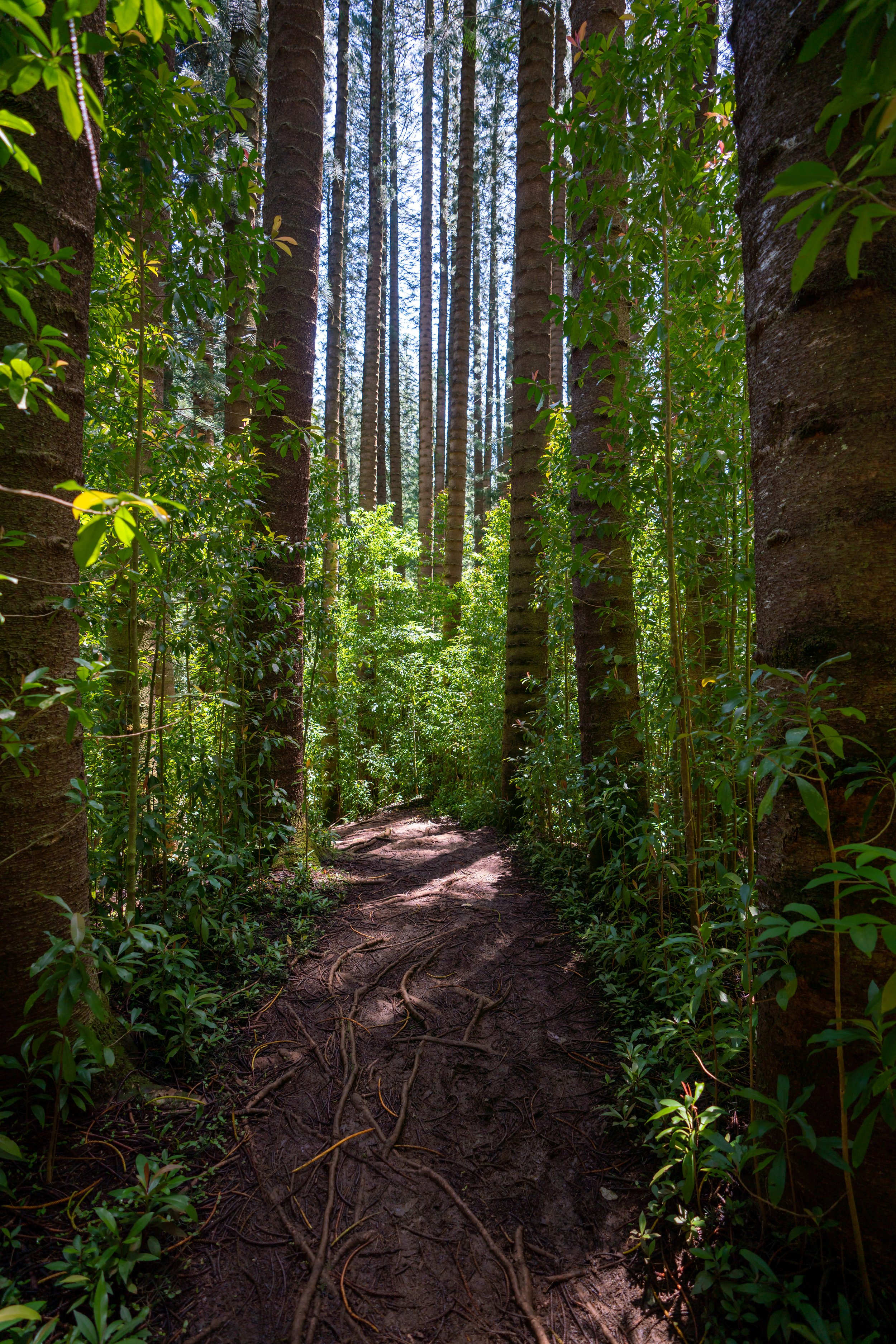
The Hauʻula Loop Trail is a beautiful North Shore day hike through a native and non-native ʻŌhiʻa–Cook Pine forest, where visitors can enjoy panoramic views of Kaipapaʻu Gulch, slow down and take pictures in the towering Cook Pine forest, and trail run—which is easily one of the better trails on Oʻahu to go for a run!
That said, the Hauʻula Loop Trail can most similarly be compared with the ʻAiea Loop Trail in central Oʻahu, with the exception that the Hauʻula Loop has more elevation change.
However, the main difference is that the Hauʻula Loop Trail’s location on the North Shore inherently makes it much less trafficked and much quieter overall, which is why it’s an adventure that I often think is one of Oʻahu’s best-kept secrets—especially if you’re staying at the Turtle Bay Resort just a few minutes up the road!
Read My Separate Post: Hauʻula Loop Trail
2. Crouching Lion Trail
Distance (Roundtrip): 0.6 miles / 1.0 km
The Crouching Lion Trail is a very short but steep day hike just north of Kaʻaʻawa on the east side of Oʻahu that I personally see as the best sunrise hike on the island because it’s such a quick adventure for such a rewarding view!
To this point, first light hitting the mountains, as well as the turquoise-blue waters in Kahana Bay, easily makes Crouching Lion one of the best sunrise trails on this list, so long as your up a bit of challenging hike!
That said, if this is your first time hiking the Crouching Lion Trail, I recommend reading my separate post where I highlight all the different trails leading up the mountain, because if you begin at the wrong trailhead—which is very easy to do in the dark—you won’t end up at the best and most iconic viewpoint.
Read My Separate Post: Crouching Lion Trail
3. Kualoa Ranch
Just to the south of Crouching Lion and on the drive north to the Polynesian Cultural Center, Kamehameha Highway passes Kualoa Ranch on the east side of Oʻahu.
For most travelers, planning both the Polynesian Cultural Center and Kualoa Ranch is a bit much for one day, but if you enjoyed my thoughts about the Polynesian Cultural Center above, consider reading my separate, similar article for recommendations about Kualoa Ranch.
Read My Separate Post: Best Things to Do at Kualoa Ranch
4. Mokoliʻi (Chinaman’s Hat)
Mokoliʻi, more commonly known as Chinaman’s Hat, is a small islet located just offshore from Kualoa Regional Park near the tours on Kualoa Ranch.
Mokoliʻi is one of the best islands off the east side of Oʻahu to kayak to, but there is a lot to know about the adventure itself, as well as how to rent a kayak, which is why I highly recommend reading my separate article to learn all the need-to-know details—especially for those visiting the island!
Read My Separate Post: Mokoliʻi (Chinaman's Hat)
5. Kāneʻohe Pancake House
The Kāneʻohe Pancake House is the best local breakfast diner on Oʻahu, which I used to think about Cinnamon’s Restaurant in Kailua because it can be one of the best places to dine in after catching sunrise on the Lanikai Pillbox Trail.
However, the Kāneʻohe Pancake House has since become my favorite because the food is better, and it is generally not as busy, with the exception of weekends!
If you’re looking for a few other great breakfast recommendations around the island, consider Cinnamon’s if you don’t mind waiting, or my other favorites include, Moke’s Bread & Breakfast and Sweet E’s Café, both of which are just a short drive from Waikīkī.
Yelp: Kāneʻohe Pancake House