
10 Best Geysers & Thermal Features in Yellowstone National Park
It is said that there are more than 500 geysers and over 10,000 hydrothermal features in Yellowstone National Park, which can certainly seem overwhelming if you’re trying to maximize your time in one of America’s biggest National Parks in just a few days!
That said, it’s not overly difficult to drive and hike through all the major geyser basins throughout Yellowstone National Park over the course of 3-5 days, but if you truly are trying to fit it all, this tends to be a lot of hot and exhausting miles in the sun!
This is exactly why I wanted to highlight the best of the best when it comes to the geysers, pools, and springs found throughout the park, as I have spent many years exploring all corners of Yellowstone to create this list of thermal features that truly stand apart from the rest!
Hiking Checklist - Yellowstone–Tetons
Here is a complete list of must-have things that you will want for any hike in the Yellowstone–Teton area.
10 Best Geysers & Thermal Features in Yellowstone National Park
Over a multi-day visit, some might say all the geyser basins across Yellowstone National Park can start to look the same.
This is exactly why this list only includes the 10 best thermal features found throughout the park, as well as my best recommendations for how to visit and time each eruption.
Moreover, getting the chance to see each of the following geysers erupt takes a lot of time and patience (often requiring numerous visits over many years), but if you’d like to know the most up-to-date conditions and information provided by the National Park Service, be sure to check out the page linked below.
National Park Service: Yellowstone Geyser Predictions
1. Morning Glory Pool (Artemisia Trail)
Distance: 1.8 miles / 2.9 km
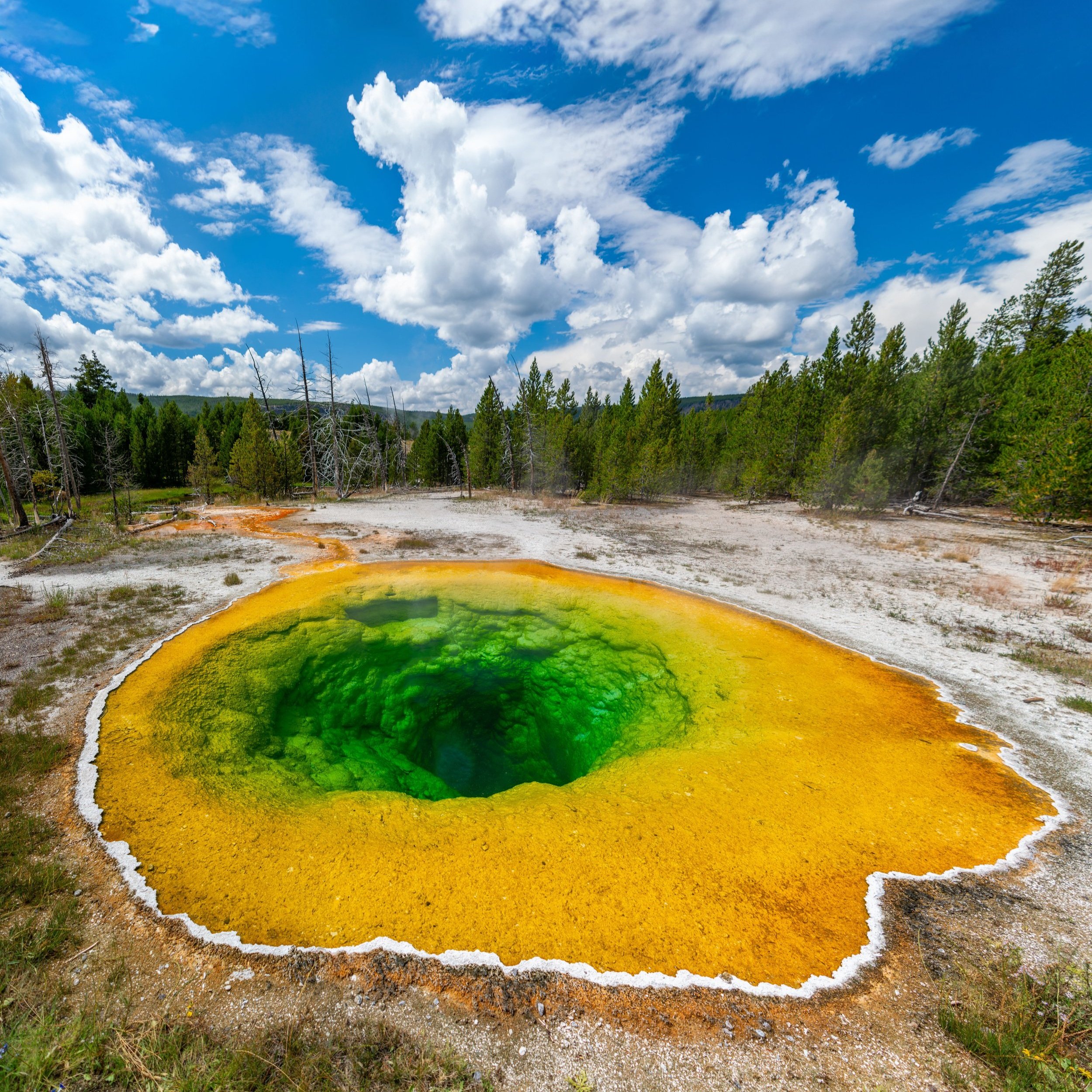
The Morning Glory Pool is a stunning hot spring in the Upper Geyser Basin, and it’s one that I often think is the most beautiful thermal feature in all of Yellowstone National Park!
That said, the Morning Glory Pool can be quite a long hike, as most who make their way to the pool begin from the Upper Geyser Basin Trailhead near Old Faithful.
However, the Artemisia Trail, linked below, is a bit of a hidden gem when it comes to hiking the fastest route to Morning Glory Pool, as opposed to the much longer trail through the entire Upper Geyser Basin.
Read My Separate Post: Artemisia Trail (Morning Glory Pool)

My Print - Morning Glory Pool (Artemisia Trail)
2. Great Fountain Geyser (Firehole Lake Drive)
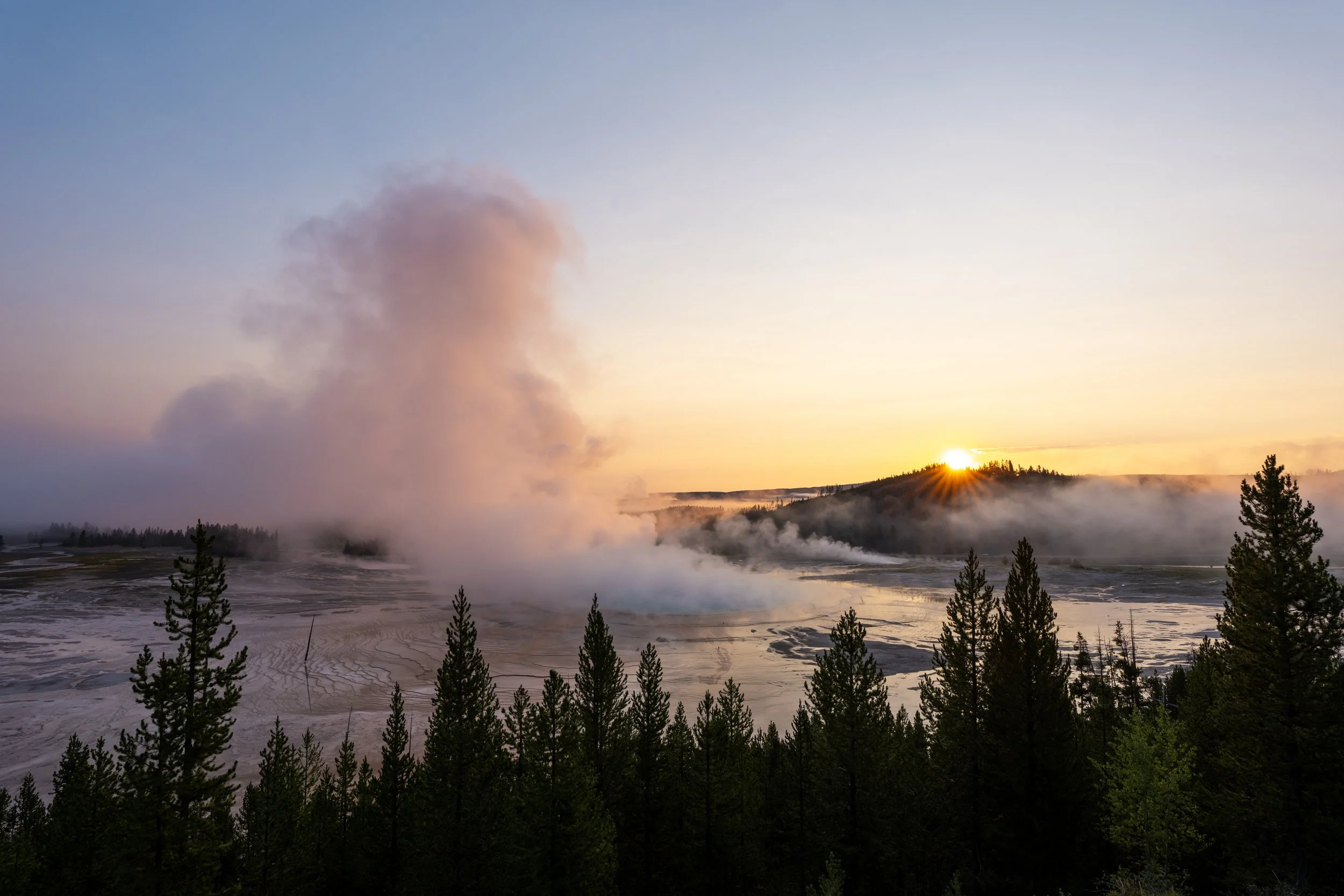
The Great Fountain Geyser is a renowned thermal feature known for its stunning, glassy, terraced pools that create beautiful reflections, like this photo at sunset!
That said, do not visit the Great Fountain Geyser anticipating an eruption, as the National Park Service reports eruptions occurring roughly every 9 to 15 hours, meaning that catching one is more about getting lucky than anything else.
However, the geyser is truly a photographer’s dream, but if you plan to visit around sunset for a photo like this, come prepared for mosquitoes! I can honestly say this ended up being one of my favorite shots I’ve ever taken in Yellowstone National Park, but they certainly don’t call the mosquito the state bird of Wyoming for no reason!
Google Maps Directions: Great Fountain Geyser

My Print - Great Fountain Geyser
3. Old Faithful
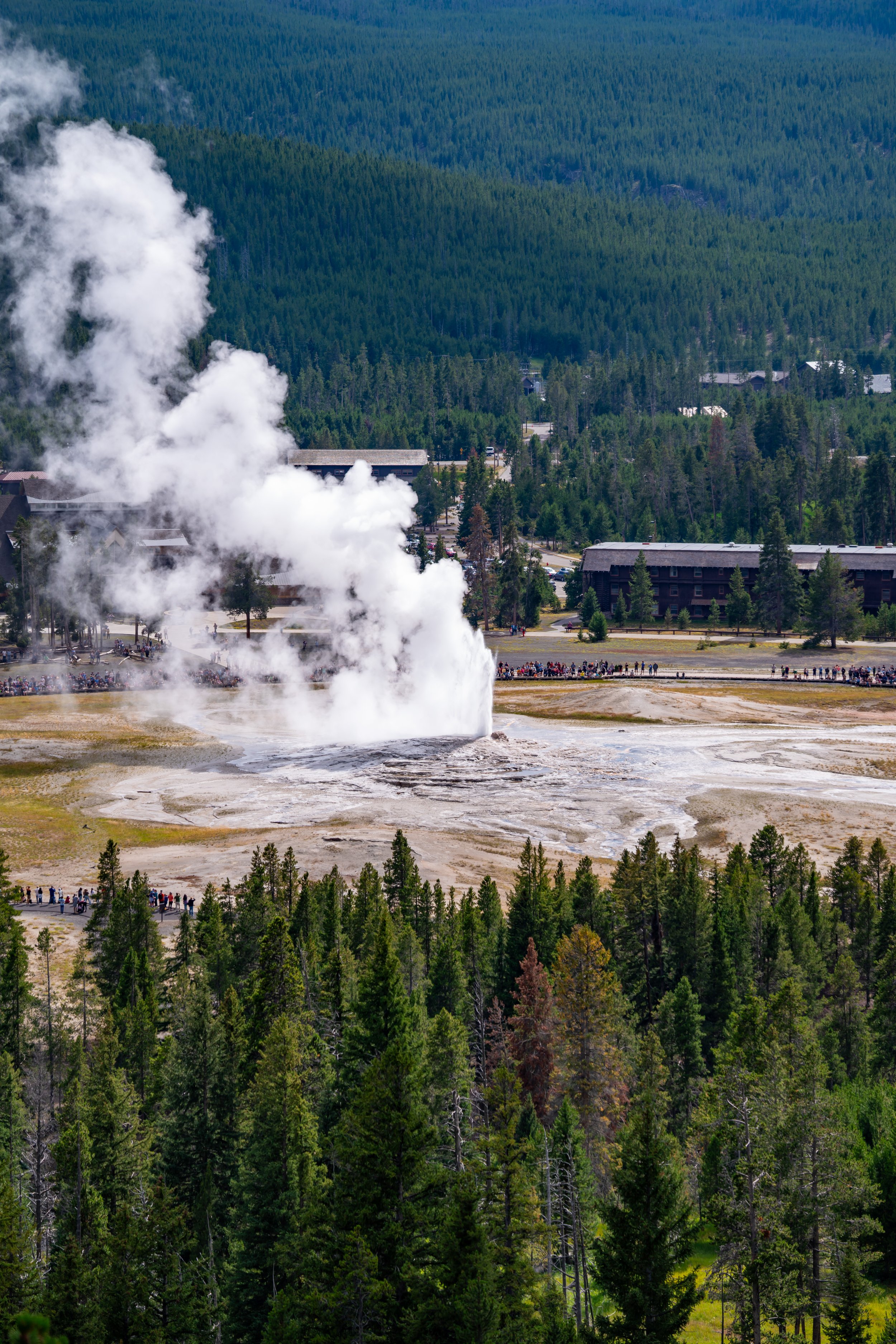
Old Faithful to the American West is as iconic as apple pie on the Fourth of July!
My humor aside, Old Faithful is a loaded topic when talking about Yellowstone National Park because, beyond the geyser itself, there are countless different things to do, all centered around this one spot in the Upper Geyser Basin.
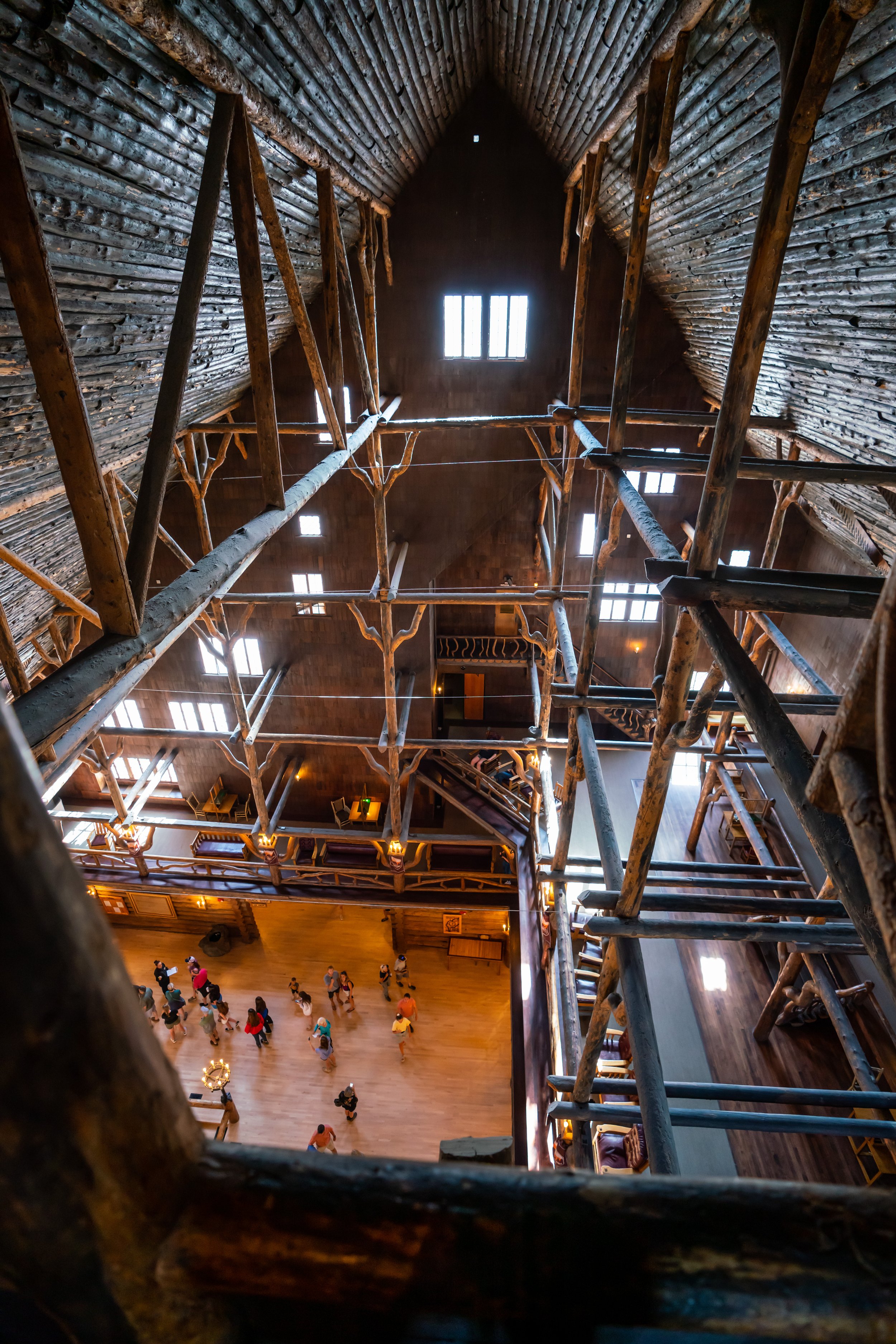
This is why my best advice for visiting Old Faithful is to arrive with the intention of staying a while. That could mean arriving first thing in the morning and hiking around all day, planning one or a few nights in the lodging around Old Faithful, or, at the very least, catching the eruption followed by exploring all the different historic buildings that surround the geyser.
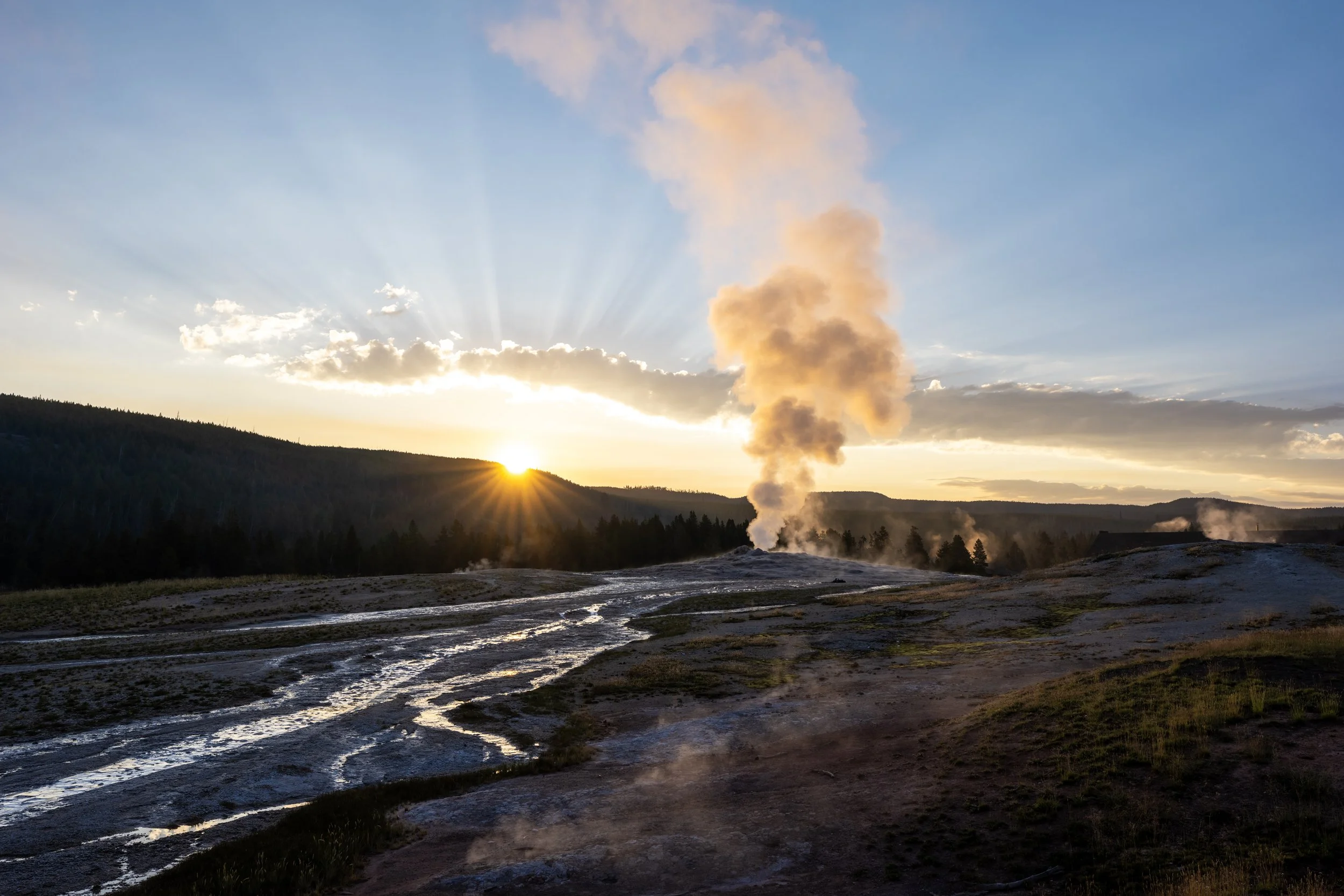
Either way, Old Faithful is so much more than simply catching the eruption, but so if you do plan to stay a while, don’t miss grabbing a cold beer at the Old Faithful Inn and watching the eruption at sunset. I’ll talk more about this little secret below!
Google Maps Directions: Old Faithful
4. Grand Prismatic Spring
Distance (Midway Geyser Basin): 0.7 miles / 1.1 km
Distance (Grand Prismatic Overlook): 1.7 miles / 2.7 km
Second only to Old Faithful in terms of popularity, the Grand Prismatic Spring is arguably the most beautiful thermal feature in Yellowstone National Park and the highlight of the Midway Geyser Basin!
That said, there are two ways to see the Grand Prismatic Spring.
The first is to walk the short boardwalk from the Midway Geyser Basin Trailhead. However, to get a better view of the vibrant, contrasting colors, the Grand Prismatic Spring Overlook off the Fairy Falls Trail is the best place to see the entirety of this natural wonder!
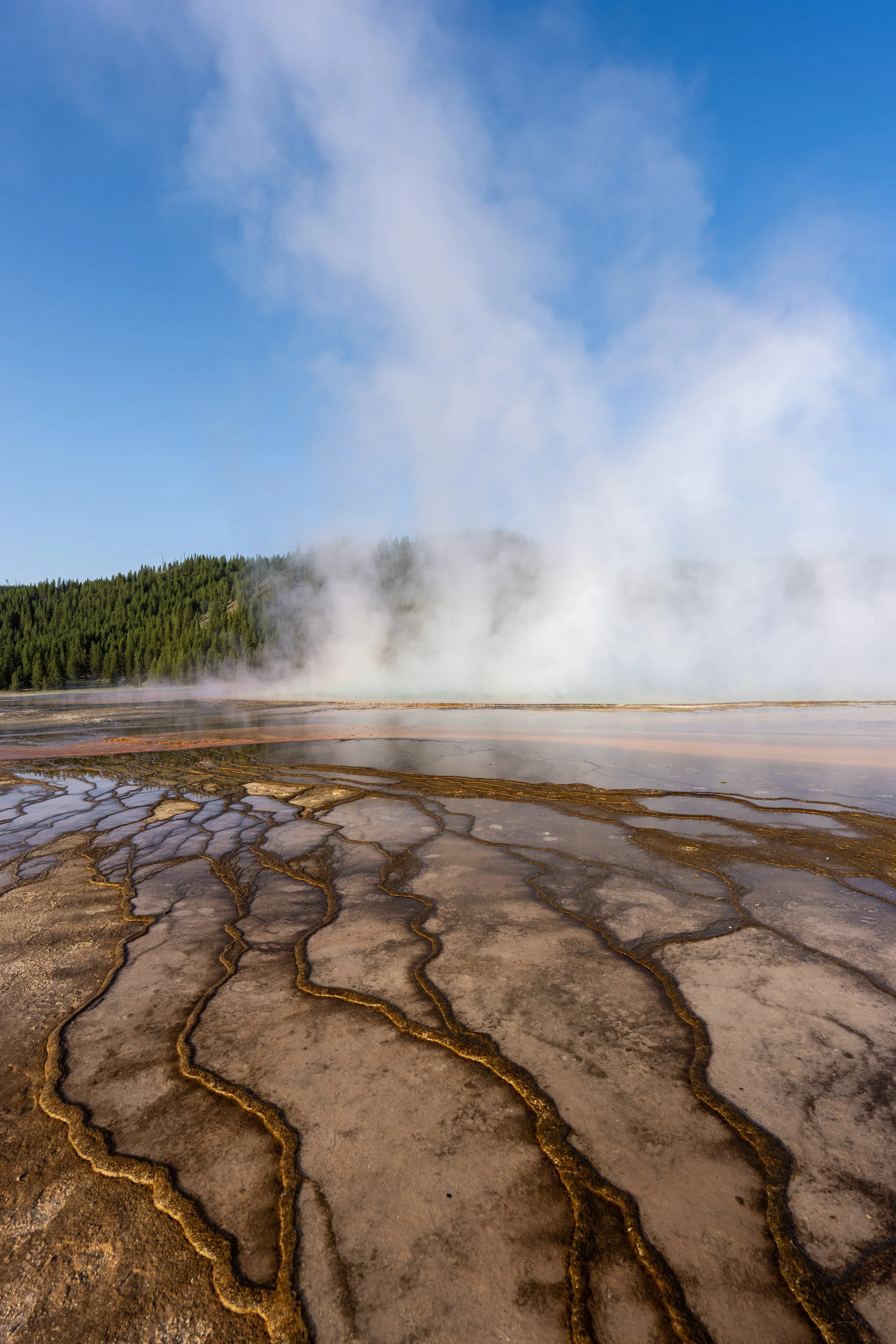
Before visiting, know that the Grand Prismatic Spring Overlook is not only very popular but also very small. This means that during the peak midday hours, the overlook is typically shoulder to shoulder with other visitors, and it’s why my favorite time to visit is first thing in the morning, as can be seen in the photo below.
Read My Separate Posts: Midway Geyser Basin Trail / Grand Prismatic Overlook Trail
5. Lone Star Geyser Trail
Distance: 5.0 miles / 8.0 km
The Lone Star Geyser is one of the more remote and elusive geysers in Yellowstone National Park, but with a little patience, it’s certainly not the most difficult eruption to try to catch!
That said, there is a lot of information to know before trying to time the Lone Star Geyser for an upcoming eruption, as the National Park Service does not have as easy a time predicting Lone Star as it does Old Faithful, largely because it generally takes a kind visitor to report the most recent eruption at the visitor center in order to predict the next one.
Nevertheless, hiking to Lone Star Geyser is certainly worth the effort, and a great way to escape the crowds—especially if you come prepared to hang out for a while until the next eruption!
Read My Separate Post: Lone Star Geyser Trail
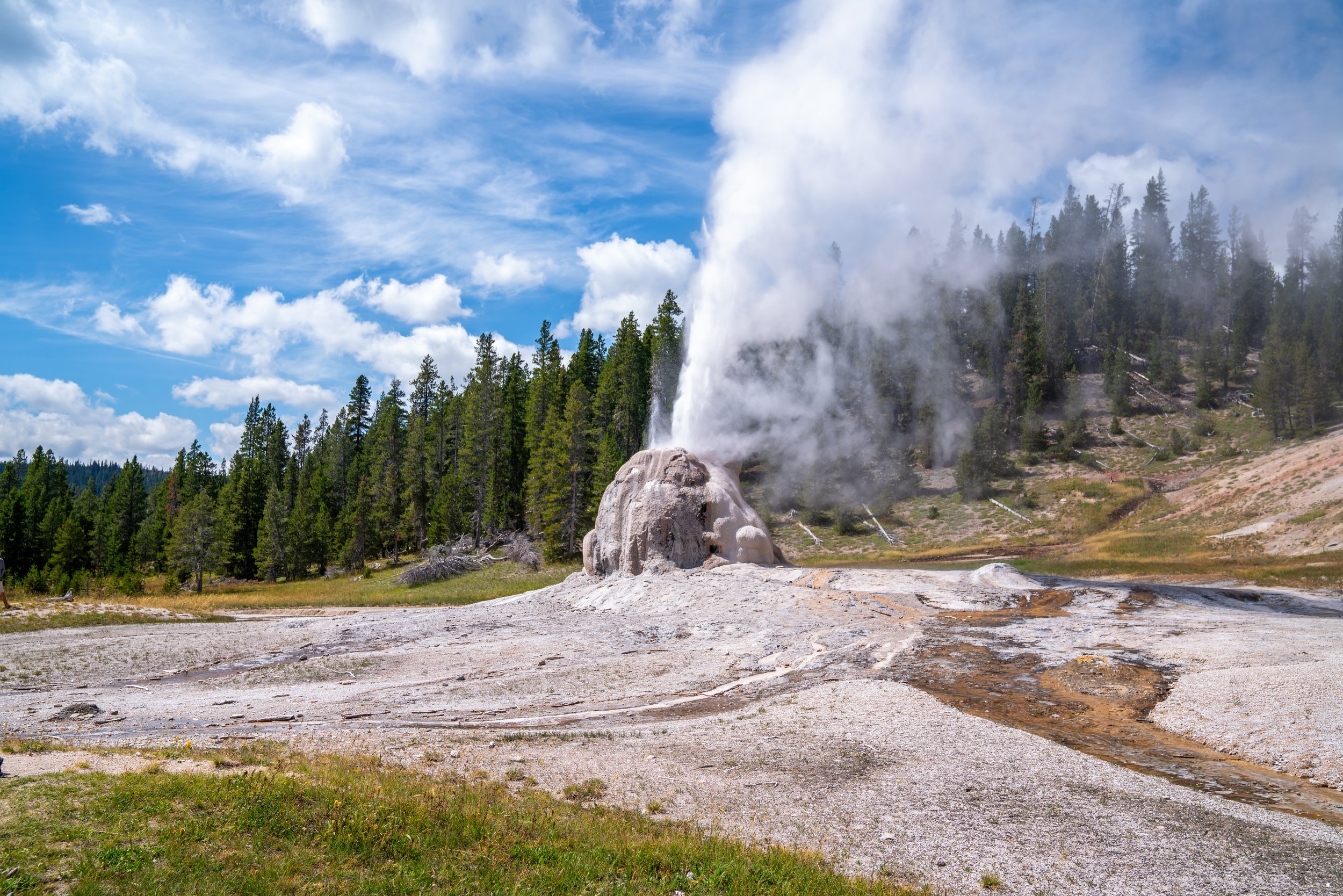
6. Lion Geyser
The Lion Geyser is a lesser-known geyser in the Upper Geyser Basin, as it is often overshadowed by Old Faithful, just on the other side of the Firehole River.
The geyser itself is actually one of four geysers, along with three hot springs, that make up what’s known as the Lion Geyser Complex, with the Lion Geyser being the largest and most predictable!
The National Park Service reports that eruptions reach heights of up to 60 ft. (18.3 m) and last between 6–7 minutes! I have personally seen it erupt a few times, and the nice thing is that even if you are not at a good viewpoint, you almost always have time to get closer, given that the eruptions last so long!
This photo was taken from the outdoor deck at the Old Faithful Inn, but I have also seen it from the foot of the geyser on the Upper Geyser Hill Trail, which is kind of a fun experience because hikers often get sprayed by the mist!
With all this in mind, the Lion Geyser is certainly not the most elusive eruption in Yellowstone National Park, as the NPS reports that they occurr somewhere between 60–90 minutes apart.
Therefore, I recommend visiting the Upper Geyser Basin with the intention of hiking around the boardwalks and enjoying the Old Faithful Inn, and if it does erupt, you generally have a fair amount of time to make your way over to a great place to see it!
Google Maps Directions: Lion Geyser

My Print - Lion Geyser
7. Mammoth Hot Springs
Mammoth is the northern gateway into Yellowstone National Park because, when flying into Bozeman to begin a Yellowstone–Grand Teton vacation, the North Entrance via Gardiner, Montana, and down into Mammoth is the way most visitors enter the park.
That said, Mammoth Hot Springs specifically is a very unique thermal area compared to most of the larger geyser basins to the south, in that the springs and pools pour out of a steep mountainside and ultimately cascade down the cliffs in a number of different, unique ways.
On a different note, I think it’s important to mention that Gardiner, Montana, just across the park boundary, is a great place to stay near the park, as all the best restaurants and hotels are only a 15-minute drive from Mammoth Hot Springs!
Google Maps Directions: Mammoth Hot Springs
8. Riverside Geyser
The Riverside Geyser is a beautiful and, yes, predictable geyser along the banks of the Firehole River, just upstream of the famous Morning Glory Pool!
Now, when I say predictable, the National Park Service often has a fairly specific window on their geyser activity page, though intervals between eruptions range around every six and a half hours.
That said, it’s really not all that hard to time, as it can be either planned when hiking through the Upper Geyser Basin, the Artemisia Trail to Morning Glory Pool, or when visiting Biscuit Basin across the road.
I write all this because whenever you’re visiting the Upper Geyser Basin, there’s usually a way to make it over to Riverside Geyser with plenty of time to spare, as long as you know the next predicted eruption!
Google Maps Directions: Riverside Geyser
9. Sapphire Pool
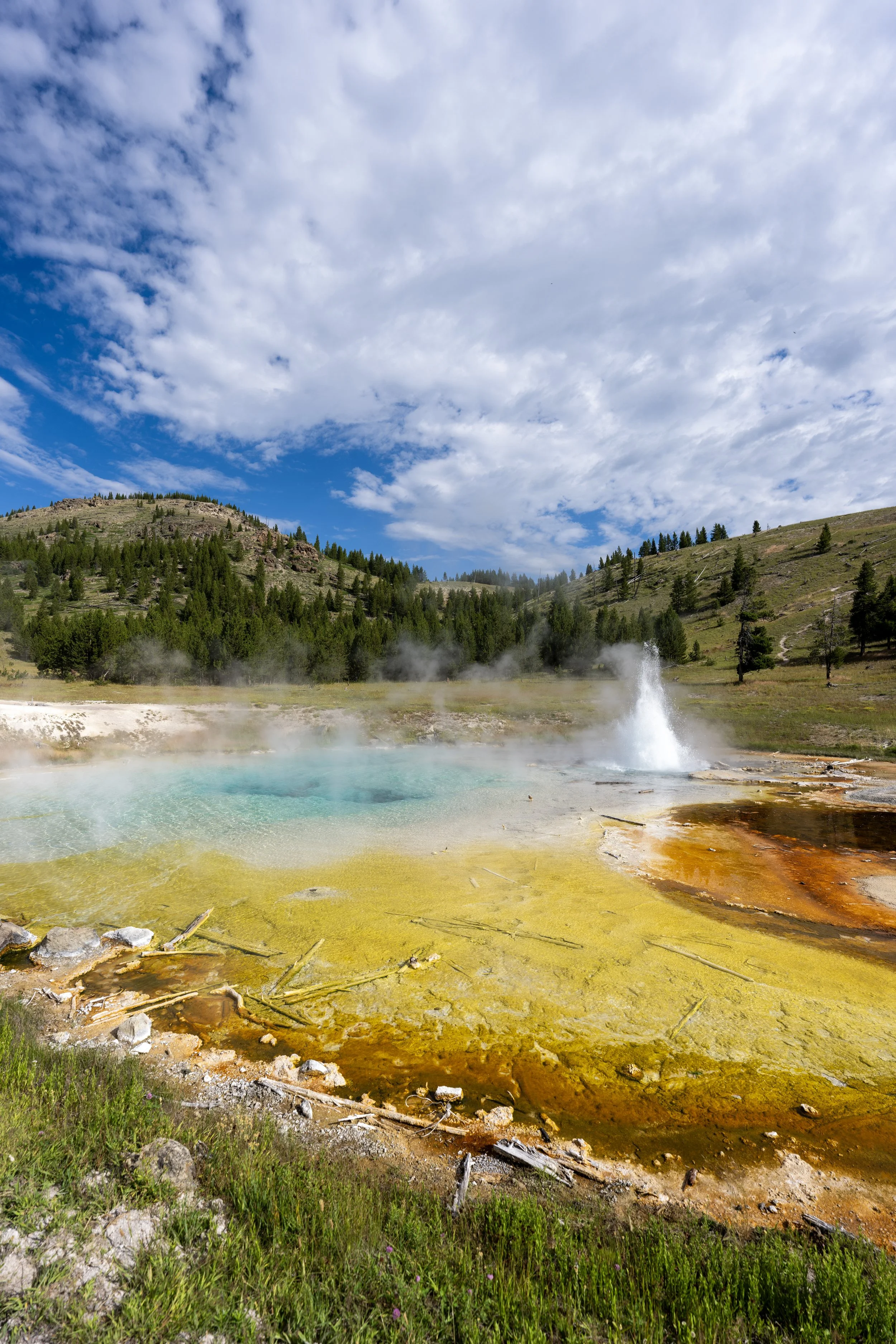
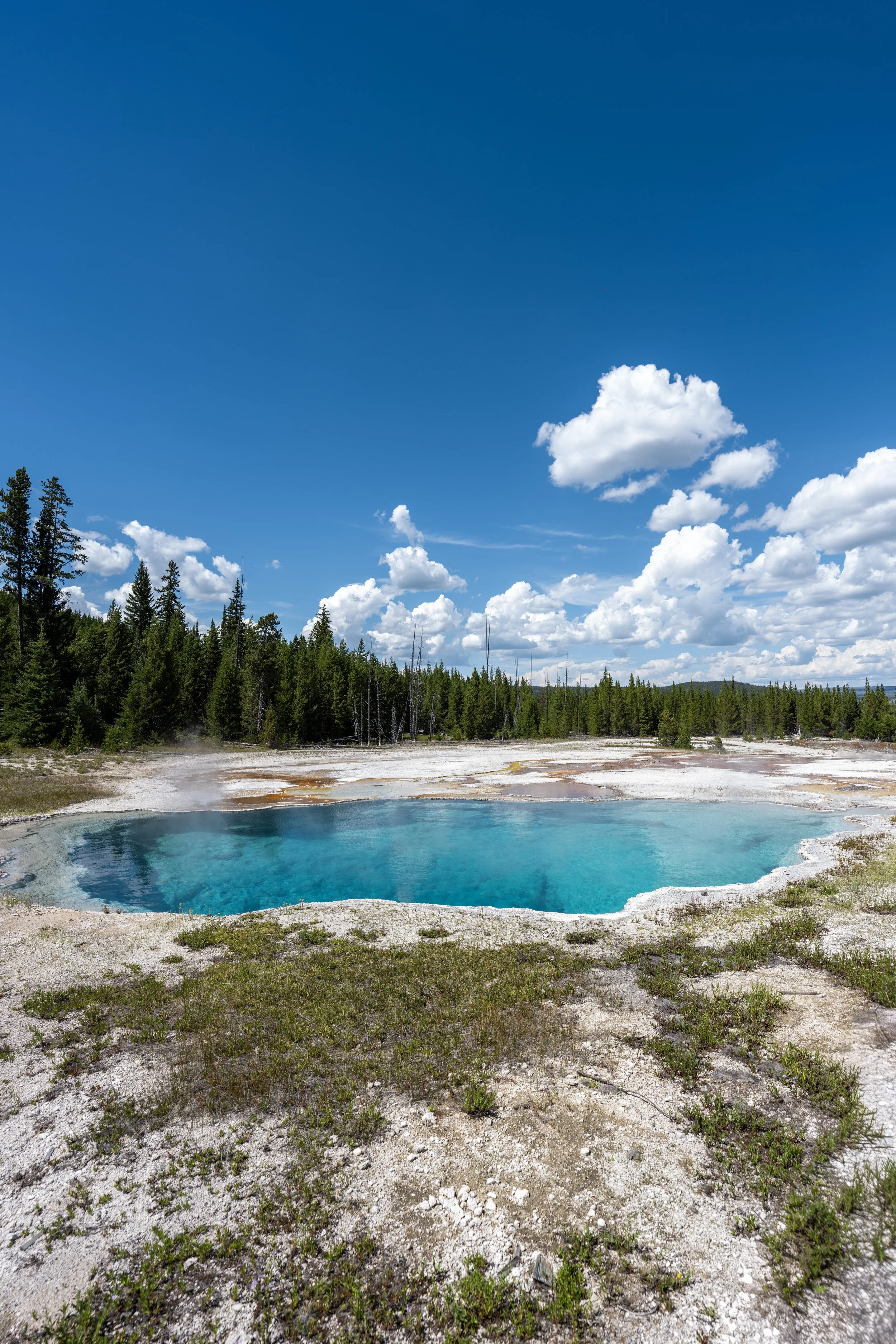
The Sapphire Pool is one of the most famous and beautiful thermal features in Biscuit Basin and all of Yellowstone National Park, but few that visit the unique hot spring today know of its quite dramatic history!
By this, I mean that Sapphire Pool was actually called the Sapphire Geyser until 1968, when almost a decade prior, a magnitude 7.3–7.5 earthquake struck on August 17, 1959 around Hebgen Lake across the border in Montana, 'forever' changing the basin as we know it!
In the years that followed this dramatic event, the Sapphire Pool began erupting more violently, with some eruptions reaching up to about 150 ft. (46 m) in height. Between 1959 and 1961, these powerful eruptions destroyed most of the Biscuit Basin’s formations around the pool and expanded its size.
However, these violent eruptions gradually declined in intensity between 1961 and 1968, and true geyser activity ultimately ended in 1968, leaving the beautiful, calm, turquoise-blue hot spring we see in Biscuit Basin today!
All of this to say, the Sapphire Pool and Biscuit Basin are truly a must-see, and if you have the time, I recommend extending your visit beyond Biscuit Basin to also hike the Mystic Falls Trail beyond the boardwalk!
Google Maps Directions: Sapphire Pool
10. Artists’ Paintpots Trail
Distance: 1.0 miles / 1.6 km
The Artists’ Paintpots Trail is a very easy day hike between the Madison Junction and the Norris Geyser Basin that leads to a short loop trail around a small thermal area filled with one-of-a-kind geysers and springs known as the Paintpots!
Personally, I like the Artists’ Paintpots Trail more than other similar areas because it’s typically less busy than other geyser basins in the park, and the short trail can easily be seen in a relatively short amount of time.
Read My Separate Post: Artists’ Paintpots Trail
Old Faithful (Upper–Lower Geyser Basins)

Canyon Village
Maddison–Norris
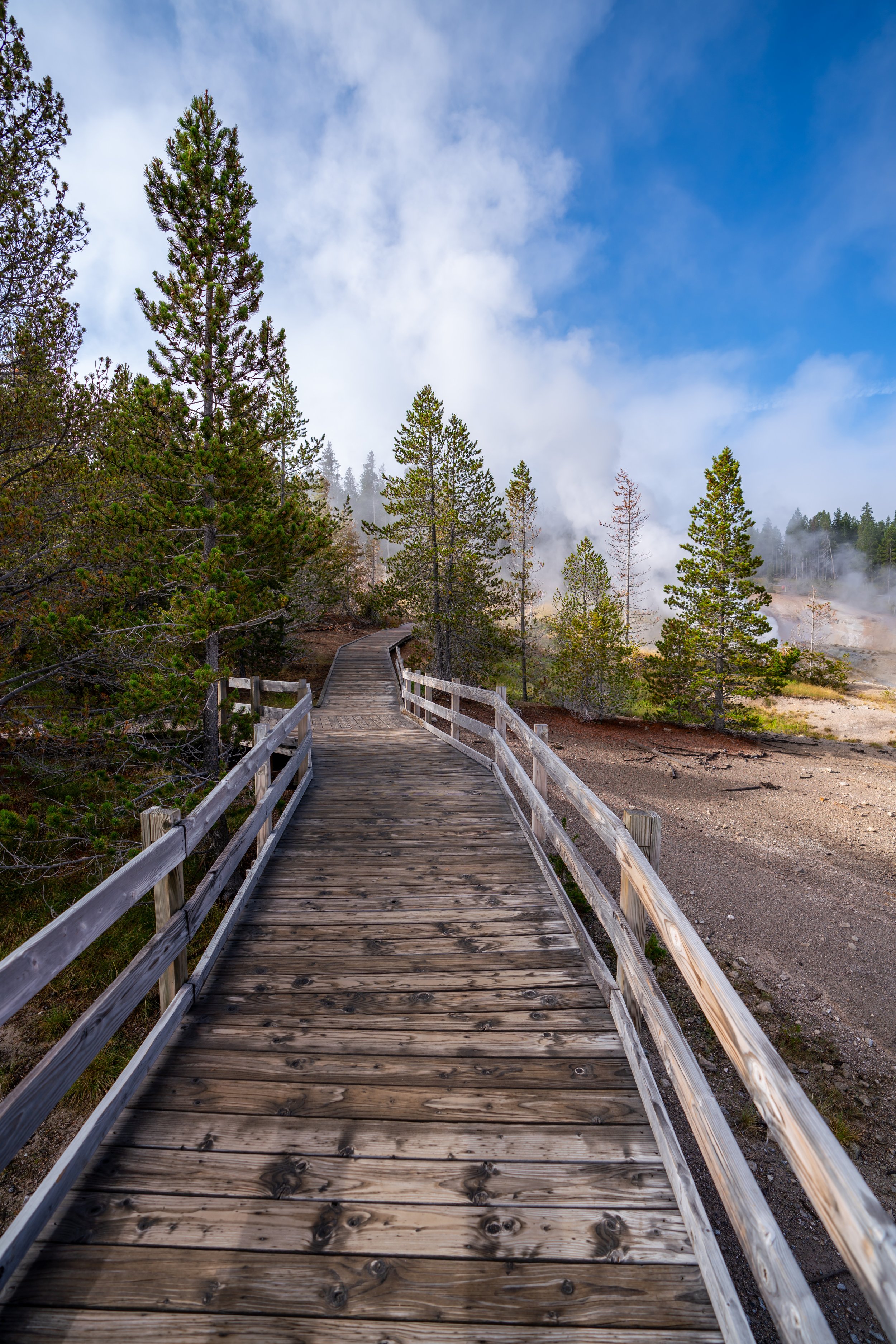
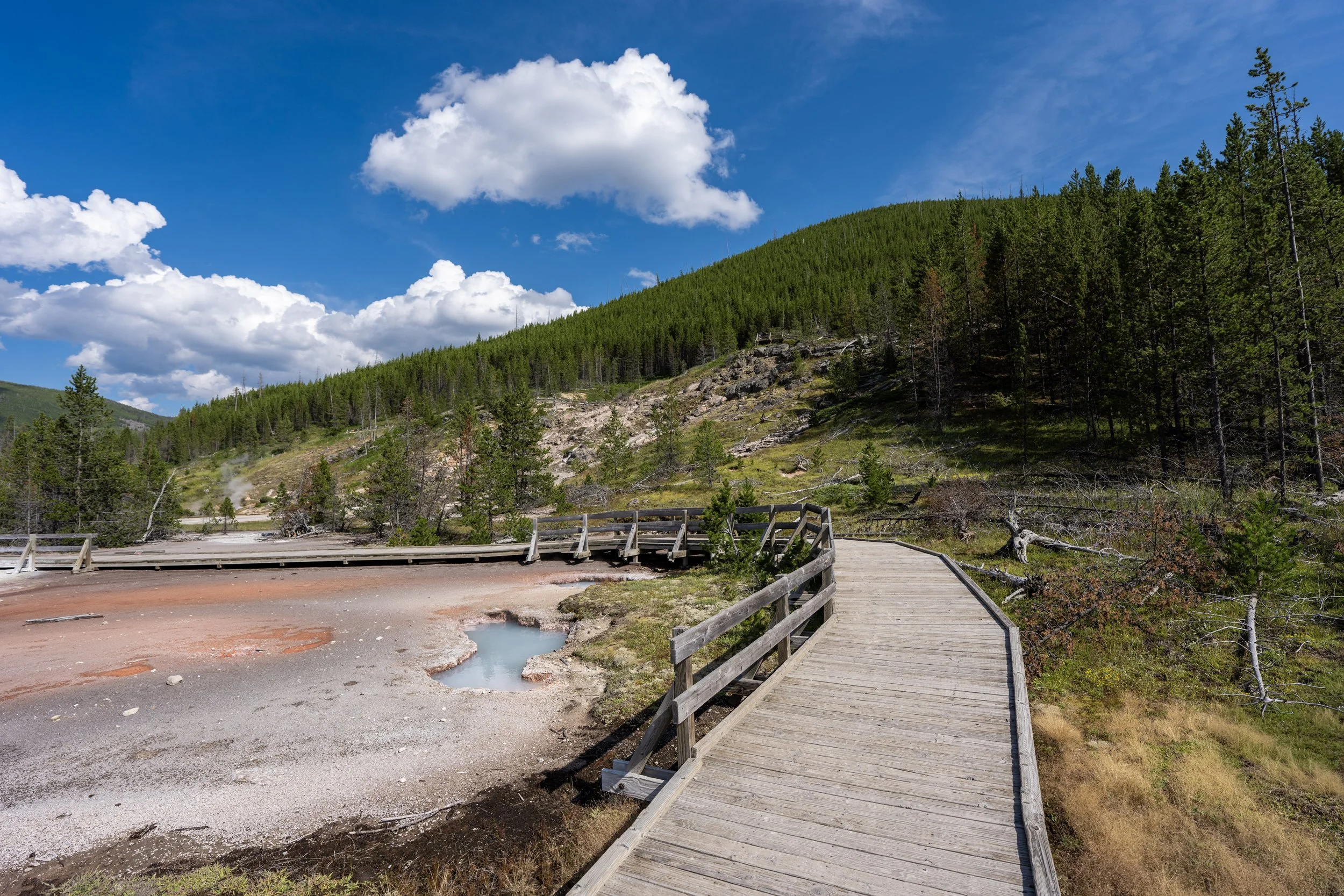
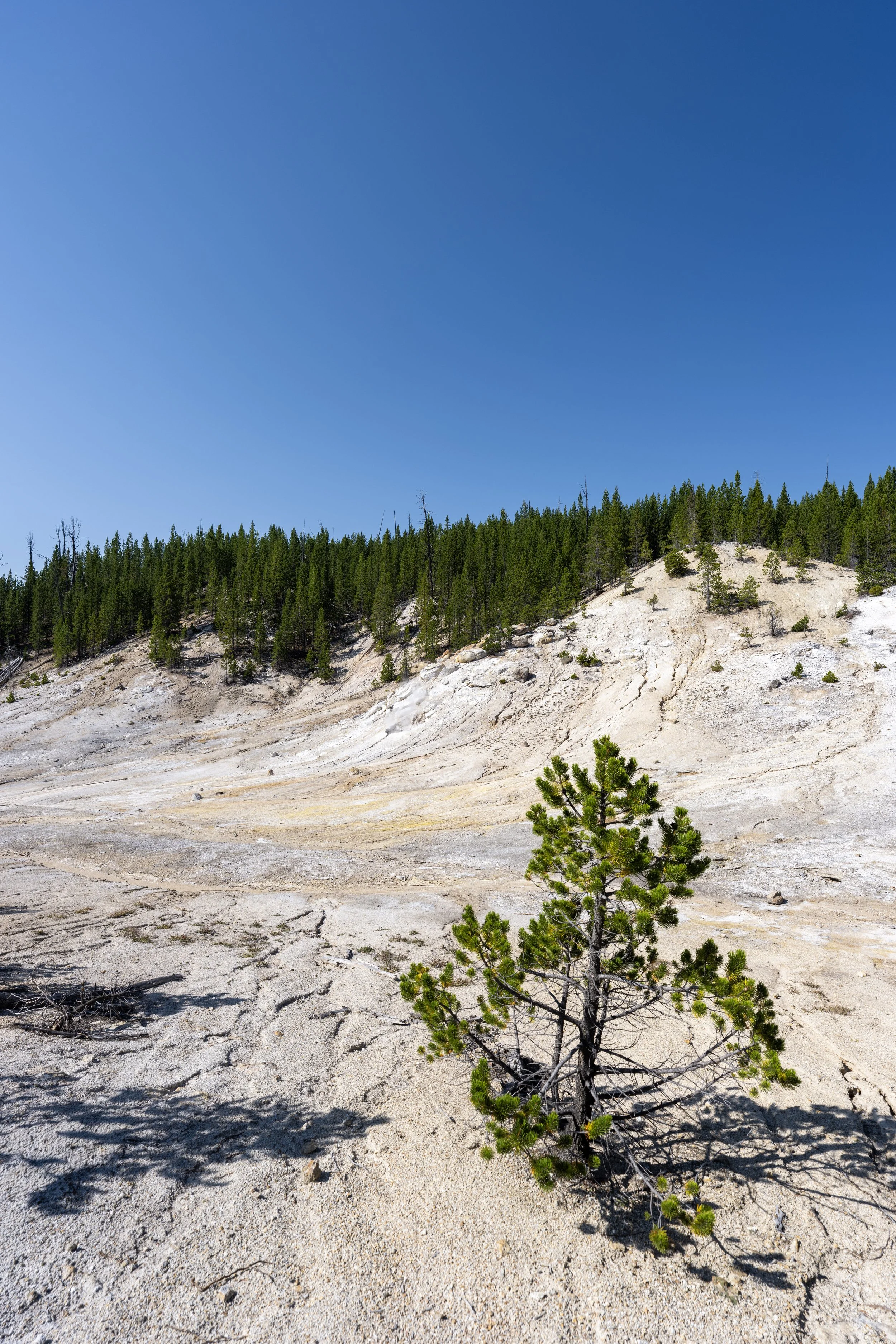
Yellowstone Lake & East Entrance

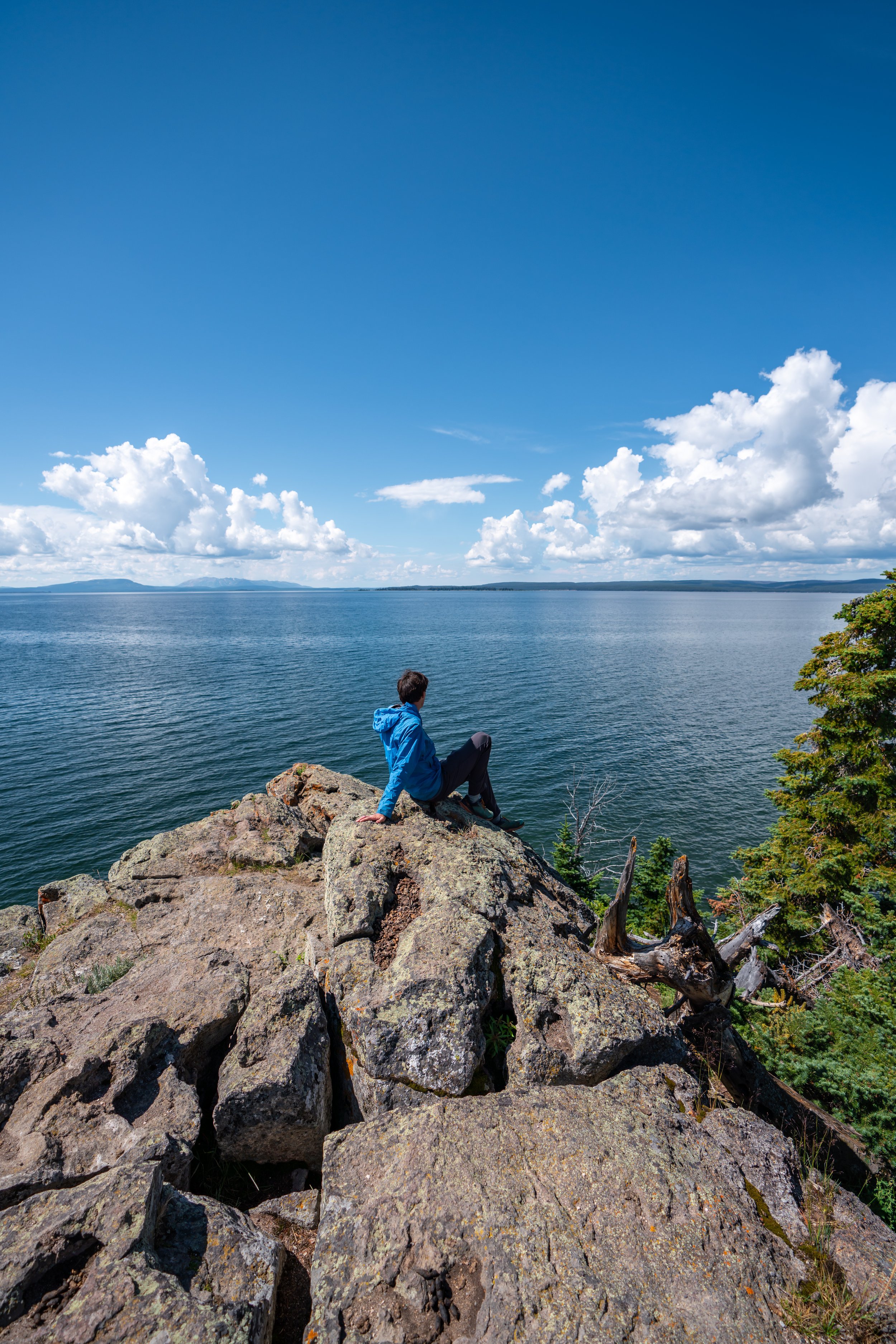
Mammoth, Lamar Valley & Tower