

20 Best Things to Do in Grand Teton National Park
From towering, glaciated peaks and alpine lakes to the vast forests and meadows scattered throughout Jackson Valley, Grand Teton National Park is truly one of the best and most beautiful National Parks in the country!
That said, one of the best things about Grand Teton National Park is that there really is something for everyone of all abilities to enjoy—especially those that like to hike!
I believe this because whether you find yourself summiting some of the highest peaks in Wyoming or simply sitting back on the banks of the Snake River looking for wildlife, Grand Teton is truly a paradise for all, as there is world-renowned hikes, fly fishing, kayaking, and so much more!
This is all to say that it’s certainly no secret why I continue to visit time and time again, which is why I believe these recommendations and insider tips are some of the best you will read about Grand Teton—particularly my thoughts on the best times to visit certain areas, based on the crowds at different trailheads around the park.

My Print - Delta Lake
What is the Best Time of Year to Visit Grand Teton National Park?
Unlike Yellowstone National Park, which closes its interior roads during the winter, the majority of the roads in Grand Teton National Park remain open year-round.
However, the most important and popular road in Grand Teton National Park is Teton Park Road, and it is not maintained during the coldest winter months.
For context, Teton Park Road is the main scenic byway that passes Jenny Lake, String Lake, Lupine Meadows, and much more.
That said, Teton Park Road typically closes around November 1 each season and reopens around May 1, depending on the seasonal snowpack.
However, Teton Park Road simply being cleared in early May is not indicative that Grand Teton National Park is open in all capacities, as the valley sits at an average elevation of around 6,600 ft. (2,012 m) and rises dramatically to approximately 13,775 ft. (4,199 m) atop the Grand Teton!
What this really means is that the winter snowpack typically stick around and covers many of the park’s trails through much of June, clearing almost entirely by mid-July.
For all these reasons, the best time to visit Grand Teton National Park is mid-July through peak fall colors, around the last week of September and into the first week of October, which also coincides with the best time of year to visit Yellowstone National Park, just to the north.
Hiking Checklist - Yellowstone–Tetons
Obviously, for camping, you will need general backpacking gear. For this reason, I wrote a separate post about what backpacking gear is worth the money, from my experience, and what the best alternatives are to save you money.
Read My Separate Post: Best Ultralight Backpacking Gear
In addition, here is a complete list of must-have things that you will want for any hike in the Yellowstone–Teton area.
20 Best Things to Do in Grand Teton National Park
The following list is written in no particular order of best or worst, but more importantly, I talk about a number of obvious and not-so-obvious tips to know at the end.
Don’t skip over the end, as many are things that I wish I would have known before my first visit to Grand Teton National Park!
On a different note, you can save time when you arrive by purchasing your National Park pass, along with your other outdoor gear, at REI before traveling to the park!
1. Jenny Lake Loop Trail
Distance: 7.1 miles / 11.4 km
The Jenny Lake Loop Trail is exactly as the name suggests, a 7.1-mile (11.4 km) loop that circles the beautiful Jenny Lake at the base of the Teton Range!
That said, there is so much more to discuss about Jenny Lake, as the Jenny Lake Trailhead at the Jenny Lake Visitor Center is the jumping-off point for countless day hikes, many of which are mentioned on this list below.
This is why the Jenny Lake Loop Trail is a bit of a loaded topic, because when starting the loop from any number of trailheads or directions, there’s certainly no shortage of different adventures to get into!
However, as for Jenny Lake itself, the full loop is a great way to visit some of Grand Teton’s most popular trails, find hidden places to go swimming and fishing, and even escape the vast majority of the crowds on the busiest parts of the loop between the visitor center and Cascade Canyon.
Read My Separate Post: Jenny Lake Loop Trail
2. Hidden Falls Trail
Distance (One Way via Jenny Lake): 2.7 miles / 4.3 km
Distance (One Way via String Lake): 2.2 miles / 3.5 km
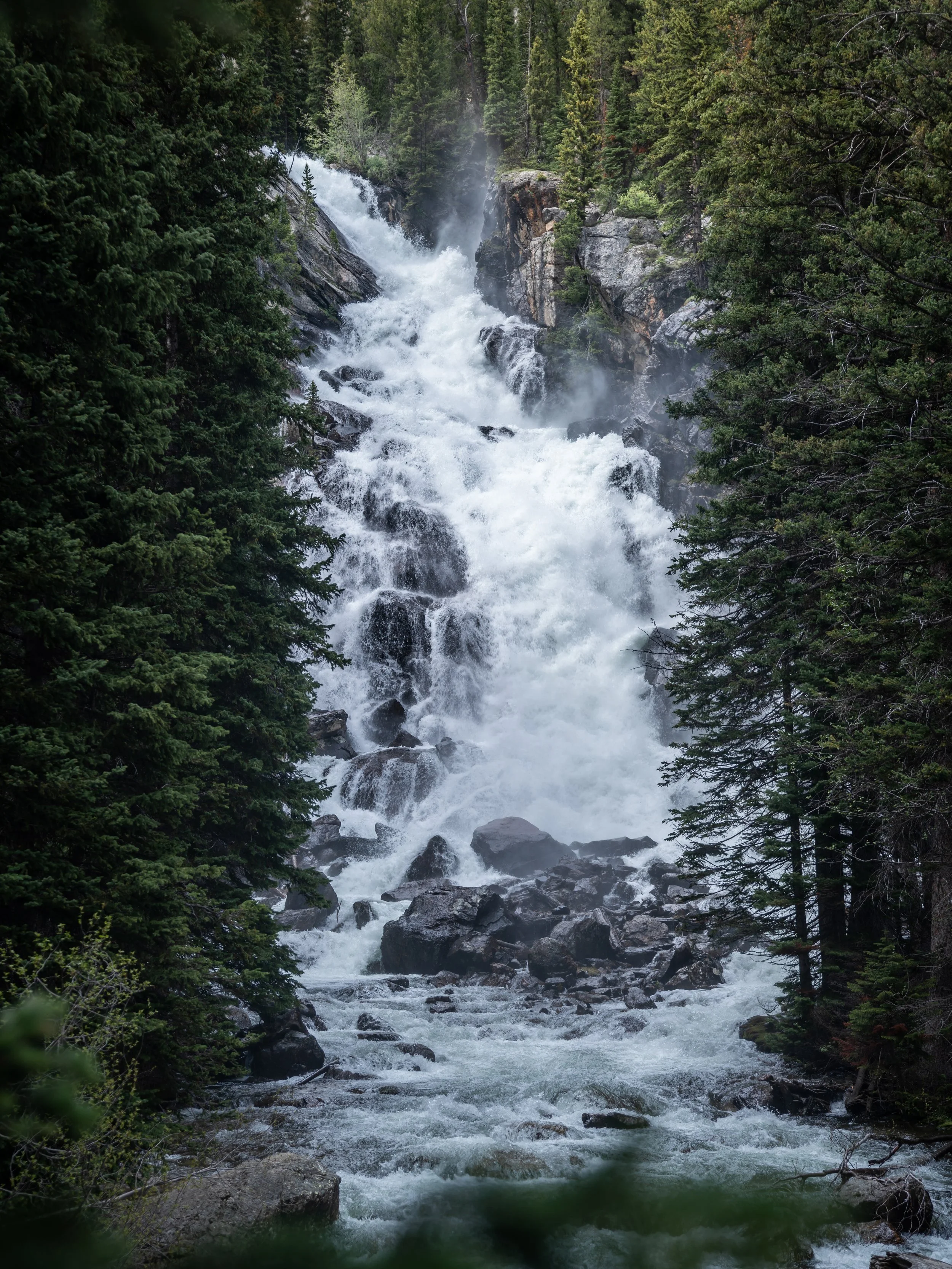
The Hidden Falls Trail is a very short side trail off the main Jenny Lake Loop that leads to a beautiful 100-ft. (30.5 m) waterfall at the mouth of Cascade Canyon!
I listed Hidden Falls Trail specifically after the Jenny Lake Loop Trail because it is easily the most popular destination off the larger loop and one of the most popular day hikes across Grand Teton National Park!
With all that in mind, there is more than one way to reach the start of the Hidden Falls Trail on the west side of Jenny Lake, which you can read about in more detail in my separate post linked below.
Read My Separate Post: Hidden Falls Trail
My Print - Hidden Falls Trail
3. Inspiration Point Trail
Distance (One Way - Jenny Lake to CC): 3.8 miles / 6.1 km
Distance (One Way - String Lake to CC): 3.3 miles / 5.3 km
Going along with both the Jenny Lake Loop Trail and the Hidden Falls Trail mentioned above, the Inspiration Point Trail is simply the continuation of the short hike off the loop to Hidden Falls, which is why the two are most commonly treated as one adventure.
However, when the Inspiration Point Trail branches away, the hike begins climbing four steep switchbacks up to a beautiful east-facing viewpoint above Jenny Lake! This is why I would consider the hike to Inspiration Point to be the most challenging of the three, though it is certainly not a difficult adventure—or at least not as challenging as others on this list, like the Lake of the Crags Trail.
In any case, if you’re interested to hike to both Hidden Falls and Inspiration Point, I recommend reading my separate Inspiration Point article over Hidden Falls, as the Inspiration Point Trail inevitably includes the most of the hike to Hidden Falls on the way to the switchbacks.
Read My Separate Post: Inspiration Point Trail
4. Moose Ponds Loop Trail
Distance: 2.0 miles / 3.2 km
The Moose Ponds Loop Trail is a very short, easy day hike around a series of small ponds on the south side of Jenny Lake that makes for one of the best self-guided adventures to try and spot wildlife in Grand Teton National Park!
I would even go as far as to say that the Moose Ponds Loop Trail is the best hike you can do on your own to maximize your chances of seeing wildlife in the park, outside of booking one of my recommended tours linked below.
Now, I have to make it clear that while I have had amazing luck spotting wildlife across Grand Teton National Park, nothing you do on your own is as guaranteed as taking one of the guided tours mentioned below.
This is why I recommend considering both the Moose Ponds Loop and booking a local guide out of Jackson, especially if you’re visiting Grand Teton National Park for just a few days!
Read My Separate Post: Moose Ponds Loop Trail
5. Grand Teton Wildlife Tour
Wildlife is certainly abundant across the Yellowstone–Teton area, but that doesn’t mean it’s always easy to see!
This is because there’s quite a bit of inside information regarding the locations where certain species are likely to be, and it truly takes a local guide who is out in the park regularly to use past sightings and current information regarding the location of carcasses to know where to know where and when to look for everything from Grizzlies and Black Bears to Elk, Moose, Bison, Wolves, and so much more!
This is all to say that I recommend booking a local wildlife guide as soon as you know your travel dates, as these tours are very popular—especially during the busy summer travel season!
6. Oxbow Bend (Sunrise)
Oxbow Bend is a beautiful natural bend in the Snake River near Jackson Lake, where the view looking west aligns perfectly with Mt. Moran and the Teton Range in the distance!
That said, Oxbow Bend is, through and through, a sunrise destination, as first light from the east brings out the best of the landscape at golden hour, much like Schwabacher Landing, a few miles away.
On top of this, Oxbow Bend can be one of the better places to look for wildlife, both early and late in the day, as everything from Moose to Grizzlies are known to frequent the area—especially considering how much less traffic there is compared to everything closer to Jenny Lake.
Google Maps Directions: Oxbow Bend
7. Private Fishing Guide
From personal fishing experience with a private guide in the Yellowstone-Teton area, I can confidently say that hiring a local guide is worth the effort—especially if it’s your first time fly fishing!
I say this because fly fishing for various species of Trout is trickier than fishing for other species found in other parts of the country, and by hiring a local guide, all the logistics and planning are taken out of the equation, allowing you the opportunity to simply get out on the water and fish in some of the most pristine rivers and streams along the base of the beautiful Teton Range!
8. Lake of the Crags Trail
Distance (One Way): 2.3 miles / 3.7 km
Elevation Gain: ~2,775 ft. / 846 m
The Lake of the Crags Trail is a hidden social trail on the west side of Jenny Lake that climbs steeply up Hanging Canyon to not one but two small, secluded alpine lakes that most visitors never venture up to see!
Now, I think it’s important to mention that the Lake of the Crags Trail is—by far—the most strenuous hike on this list, as it averages about 120 ft. (37 m) of elevation change every 0.1 miles (0.2 km)!
What I hope this really says is that the Lake of the Crags Trail is not for the faint of heart, but if you think you’re up for the challenge, I can honestly say the effort is worth the reward, as nothing quite compares to finally jumping into the freezing cold waters of both Ramshead Lake and Lake of the Crags at the very end!
Read My Separate Post: Lake of the Crags Trail
9. Delta Lake Trail
Distance: 7.6 miles / 12.2 km
Elevation Gain: 2,275 ft. / 693 m
The Delta Lake Trail in Grand Teton National Park is a steep but stunning adventure that climbs its way up to a small turquoise-blue lake situated directly beneath the Grand Teton and the Teton Glacier!
That said, Delta Lake was once a 'social trail' in the truest sense, in that only locals knew how to get there in the days before social media.
However, what was once a little-known secret has since become one of the most popular day hikes in Grand Teton National Park, even to the point where the National Park Service now recognizes its popularity and has taken steps to help hikers leaving the maintained trail that climbs up to both Surprise and Amphitheater Lakes.
This is all to say that I have personally seen the Delta Lake Trail change year after year, but don’t expect to see any signs marking the Delta Lake Trail, as making it to the lake will require some route-finding, most notably knowing exactly where to leave the maintained trail as outlined in my detailed separate article linked below!
Read My Separate Post: Delta Lake Trail
10. Surprise & Amphitheater Lakes Trail
Distance: 10.0 miles / 16.0 km
Elevation Gain: 2,960 ft. / 902 m
Surprise Lake and Amphitheater Lake are two neighboring emerald-green alpine lakes below Disappointment Peak and the Grand Teton that make for a great but steep day hike to escape the vast majority of crowds, both in busier parts of the park and those starting from Lupine Meadows to hike the Delta Lake Trail.
I say this because the first six switchbacks up the Surprise and Amphitheater Lakes Trail are quite busy, as the vast majority of visitors are on the trail to hike to Delta Lake.
However, after passing the Delta Lake junction, the hike to Surprise and Amphitheater Lake becomes much quieter and more relaxing—especially once you reach the top and finally get to swim and enjoy both beautiful lakes!
Read My Separate Post: Surprise & Amphitheater Lakes Trail
11. Schwabacher Landing (Sunrise)
Schwabacher Landing is an iconic scenic spot along the banks of the Snake River that is famous because of the stunning landscape photos that can be captured right as first light hits the highest summits of the Teton Range at sunrise!
That said, sunrise is without a doubt the best time of the day to visit Schwabacher Landing, but if you plan to do so, expect the riverbank to be very busy during the summer travel season, which is why I recommend arriving well before sunrise if you’re looking to capture a specific angle.
Google Maps Directions: Schwabacher Landing
12. Grand Teton River Trips
The Snake River is the beautiful, winding river at the base of the Teton Range, known for its pristine fishing, hidden swimming holes and hot springs, and picturesque photo opportunities, like Schwabacher Landing mentioned above.
However, what many visitors don’t consider before visiting Grand Teton National Park is that the Snake River is also a great place to book a scenic river float or even a whitewater rafting trip through one of the local guides out of Jackson.
All three of the tours linked below are located within a short drive of Grand Teton National Park, making all a great option to consider for a fun half-day adventure in the park!
13. Mormon Row (T.A. Moulton Barn)
Mormon Row in Grand Teton National Park is a historic settlement established by some of the valley’s earliest homesteaders in the 1890s, long before the National Park was established in February 1929.
Fast forward to today, and visitors can still see these same historic structures standing, which have become a favorite among park guests—especially photographers looking to frame the T.A. Moulton Barn with the dramatic Teton Range in the background!
Google Maps Directions: Mormon Row (T.A. Moulton Barn)
14. String Lake Loop Trail
Distance: 3.8 miles / 6.1 km
The String Lake Loop Trail is a beautiful and relatively short loop around String Lake that can most closely be compared with the Jenny Lake Loop Trail, apart from a few key differences.
The first is distance, as the String Lake Loop Trail is notably much shorter than the 7.1-mile (11.4 km) loop around Jenny Lake, making it, in my opinion, one of the best kid-friendly day hikes in Grand Teton National Park!
The second, and perhaps more important, difference is the crowds. String Lake is a very popular drive-up lake where visitors love to swim and hang out on the east shoreline, but outside of the busy parking and trailhead area, the full loop around String Lake is very quiet!
This is why choosing the String Lake Loop can be a great option if you’re more interested in escaping the crowds—not to mention, String Lake can also be an alternative place to look for parking if parking at the Jenny Lake Visitor Center is too difficult to find.
Read My Separate Post: String Lake Loop Trail
15. Swimming & Paddle Boarding String Lake
Swimming and paddle boarding on String Lake is as old as pastimes get in Jackson, and it’s one of the best ways to spend a hot summer day in Grand Teton National Park!
This is because String Lake is extremely shallow, meaning that paddle boarding on the lake is generally considered to be much safer compared to some of the larger, colder, and deeper alpine lakes at the base of the Teton Range.
As a result, String Lake is also much warmer by mid-summer than most other alpine lakes in the park, again making it a great place for people of all ages to come and enjoy a beautiful summer day outside!
16. Jenny Lake Lodge & Cabins
Dating back to its origins from 1922, the Jenny Lake Lodge has been serving Wyoming guests for many years, long before Grand Teton National Park was even established in 1929.
That said, the Jenny Lake Lodge is easily the best place to stay in Grand Teton National Park, and I believe this because the accessibility of the lodge to Jenny Lake, a number of hiking trails, and all of the best things to do on this list easily make the Jenny Lake Lodge one of the best things to do within the park—especially if you’re interested in having a quieter stay away from the business of nearby Jackson!

Jenny Lake Lodge
17. Phelps Lake Loop Trail (Cliff Jumping Rock)
Distance: 6.6 miles / 10.6 km
The Phelps Lake Loop Trail is a long and quiet day hike around the perimeter of Phelps Lake, where visitors can enjoy beautiful views looking up toward Death Canyon, a beach on the far northern end of the lake, and even cliff jumping from a prominent, well-known rock on the east side!
It’s for all these reasons that I believe the Phelps Lake Loop Trail is the best and most scenic loop trail in Grand Teton National Park, as it has the most dramatic views of the Teton Range—not to mention that the very challenging parking situation makes it one of the least trafficked day hikes in the park.
To learn more about the full trail, including the fastest route to the renowned Phelps Lake Cliff Jumping Rock, I highly recommend reading my separate post linked below to learn more!
Read My Separate Post: Phelps Lake Loop Trail (Cliff Jumping Rock)
18. Phelps Lake Overlook Trail
Distance: 2.0 miles / 3.2 km
The Phelps Lake Overlook Trail is a fairly easy, relatively flat day hike on the north side of Phelps Lake that leads to a beautiful viewpoint above Phelps Lake Beach!
This is exactly why I think the Phelps Lake Overlook Trail is one of the better kid-friendly day hikes, as well as a great rainy-day adventure.
In either case, the short hike to the scenic overlook is a great way to get outside without committing to something too long, a sentiment that’s often true about most day hikes in Grand Teton National Park.
Read My Separate Post: Phelps Lake Overlook Trail
19. Moose Wilson Road Overlook
As the name should imply, the Moose Wilson Overlook is a great place to look for Moose and other wildlife in Grand Teton National Park, especially first thing in the morning!
That said, I personally recommend checking out the overlook before heading out on other nearby adventures, like the Phelps Lake Loop, but know that just because you arrive at the right time doesn’t mean anything is guaranteed when it comes to wildlife.
This is, again, why I recommend booking one of the guided wildlife tours out of Jackson!
Google Maps Directions: Moose Wilson Road Overlook
20. Grand Teton National Park Guided Tour
Between the crowds, the wildlife, and all there is to consider, planning a trip to Grand Teton National Park can be overwhelming, and it’s completely understandable if you’re not comfortable hiking in Grizzly country for the first time. Trust me, it takes some getting used to, and it’s still something I’ll likely never feel completely okay with, even after countless encounters.
If any of this resonates with you, I recommend booking one of the local guides out of Jackson to see the best of Grand Teton without the stress of planning a trip.
Additionally, I’ve included these tours because adventuring alone in Grizzly country, might not be the way you want to go. In this case, the tour options that I’ve listed provide a safe and amazing way to experience the Yellowstone–Teton area, and they offer the opportunity to discover nearby adventures that you may not have heard of otherwise!
10 Best Things to Do Near Grand Teton National Park
1. Yellowstone National Park
In northwest Wyoming, both Grand Teton National Park and Yellowstone National Park are seemingly synonymous and are often paired together into one roadtrip.
In fact, it’s only a 1-hour, 50-minute drive from the Jenny Lake Visitor Center in the heart of Grand Teton National Park to Old Faithful.
This is why, if you enjoyed reading everything I’ve written about Grand Teton, I recommend checking out my separate article about Yellowstone National Park, where I share the same inside information about everything there is to see and do on all sides of the park.
Read My Separate Post: Yellowstone National Park
2. Sacred Rim Trail
Distance: 3.7 miles / 6.0 km
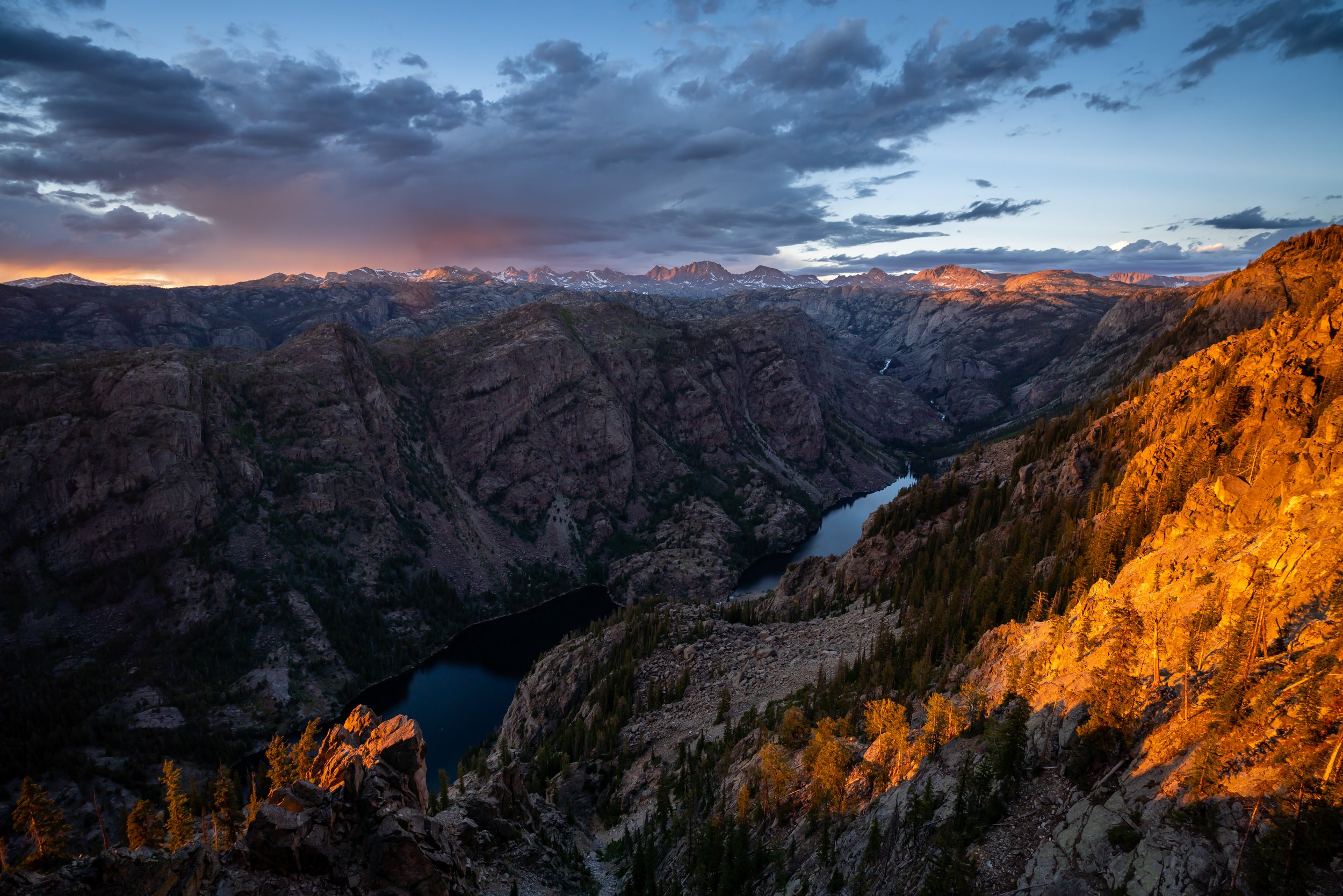
The Sacred Rim Trail in Pinedale, Wyoming—about a 1-hour, 30-minute drive south of Jackson—is arguably the best day hike outside of both Yellowstone and Grand Teton National Park!
On top of this, the beautiful little town of Pinedale is worth the visit on its own, as the little downtown strip has great food (Wind River Brewing), great coffee (Pine Coffee Supply), fun small-town nightlife, and an outdoor shop (Great Outdoor Shop) that certainly rivals REI in Jackson!
This is all to say that the Sacred Rim Trail in the Wind River Range is certainly an adventure worth going out of the way for! I would even go as far as to say that Sacred Rim is the best day hike across the entire Wind River Range—and yet, so few people actually go out of their way to hike this spectacular hidden gem!
Read My Separate Post: Sacred Rim Trail
My Print - Sacred Rim Trail
3. Virginian Restaurant
The Virginian Restaurant is the best local breakfast spot in Jackson!
Now, that goes without saying that sitting down to enjoy breakfast is not recommended if you have plans to start your day from one of the busiest trailheads in Grand Teton National Park.
This includes the Jenny Lake Trailhead, the Lupine Meadows Trailhead, the Laurance S. Rockefeller Preserve (Phelps Lake), and the String Lake Trailhead.
However, if you have plans to start your day elsewhere, or are planning to make the long drive north into Yellowstone, I highly recommend stopping in at the Virginian, as there is no better place in Jackson to enjoy a big breakfast!
Yelp: Virginian Restaurant
4. Hand Fire Pizza
Hand Fire Pizza is not only the best pizza restaurant in Jackson; it is genuinely one of the best restaurants near Grand Teton National Park!
That said, Hand Fire Pizza is located right in the heart of downtown Jackson inside the historic 1940s-era Teton Theatre, which was converted in 2017 into the restaurant both locals and visitors know and love today!
Since then, Hand Fire Pizza has been serving the best wood-fired pizza in all of Jackson, which is why it is one of the most popular restaurants in town!
Yelp: Hand Fire Pizza
5. Gannett Peak: The Highest Peak in Wyoming
Distance: 44.3 miles / 71.3 km
Contrary to popular belief, the Grand Teton in Grand Teton National Park is not the highest peak in Wyoming!
Instead, the title goes to Gannett Peak, which is widely considered to be the most remote state high point in the Lower 48 States and potentially the most difficult, rivaled only by Granite Peak in the Beartooth Mountains of Montana, just to the north of Yellowstone National Park.
I write all this because, if you think of yourself as someone who enjoys backcountry hiking and mountaineering, Gannett Peak may be the adventure for you!
However, if not, the simple backpacking trip into Titcomb Basin is worth the effort alone, as the basin sits beneath a number of stunning, towering, glaciated peaks and contains a number of beautiful lakes for backcountry fishing!
For all these reasons, the hike into Titcomb Basin is truly an adventure worth considering—especially if you were already looking for a fun, multi-day adventure near both Yellowstone and Grand Teton National Park!
Read My Separate Post: Gannett Peak via Titcomb Basin
6. Beartooth Highway
Soaring to an elevation of 10,947 ft. (3,337 m) at Beartooth Pass, the Beartooth Highway is easily one the best and most beautiful scenic drives on the planet, especially if you have the opportunity to hike around the pass at golden hour!
That said, the Beartooth Highway is rarely a convenient drive, whether coming to or from Yellowstone, but I can confidently say that it’s absolutely worth the detour, regardless of the time it adds to your drive!
Google Maps Directions: Beartooth Highway
7. Wind Cave National Park
In this part of the country, Grand Teton National Park and Yellowstone National Park, are most often combined with a roadtrip across Wyoming to visit both Wind Cave National Park and Badlands National Park in the Black Hills of western South Dakota. The drive from the Jenny Lake Visitor Center, north of Jackson, to the Wind Cave Visitor Center is roughly 7 hours and 20 minutes, which really isn’t all that bad, considering most people make the long drive across Wyoming starting from Devils Tower, not Grand Teton or Wind Cave.
That said, I’ve also spent quite a bit of time exploring Wind Cave National Park over numerous seasons, which is why, if you enjoyed reading everything I’ve written about Yellowstone, I recommend checking out my separate article about Wind Cave, where I share the same inside information about everything there is to see and do on all sides of the park!
Read My Separate Post: Wind Cave National Park
8. Badlands National Park
Just as Yellowstone is to Grand Teton, so is Badlands National Park to Wind Cave!
This is why I simply can’t highlight Wind Cave National Park without talking about the Badlands just down the road, as I have spent equally as much time exploring the ins and outs of Badlands National Park, highlighting the best overlooks and trails and diving into detail about the best times of day to visit each!
All that to say, it’s only a 2-hour, 20-minute drive from the Wind Cave Visitor Center to the Pinnacles Entrance Station, just south of Wall and I-90. If you’re already coming from the east to visit Yellowstone, I recommend checking out my separate articles to learn more about both of South Dakota’s beautiful National Parks, including a separate deep dive I’ve written about the best things to do in the Black Hills!
Read My Separate Post: Badlands National Park
9. Bear Creek Overlook Trail
Distance: 5.2 miles / 8.4 km
When talking about everything surrounding Grand Teton, Yellowstone, Jackson, and Pinedale, the Bear Creek Overlook Trail is a bit of the odd one out, as it’s easily the most inconvenient to everything discussed in this article.
However, the reason I included the Bear Creek Overlook on this list is because it has long stood as one of my top five favorite hikes I’ve ever done! Therefore, I’m not kidding when I say: go out of your way to hike the Bear Creek Overlook Trail—and know that it really isn’t all that big of a stretch if you’re already flying into Bozeman or planning to visit Glacier National Park on the same trip!
Read My Separate Post: Bear Creek Overlook Trail
10. The Beaten Path Trail
Distance: 26.0 miles / 41.8 km
The greater Yellowstone–Teton area is a renowned destination for backcountry hikers, but no adventure may be as beautiful or as pristine as The Beaten Path in the Beartooth Mountain Range north of Yellowstone!
Personally, I have only hiked about the first 8.0 miles (12.9 km) of The Beaten Path to Rainbow Lake before had to unfortunately turn around without completing the full trail.
This is why the article linked below is far from complete, but I have every intention of hiking the full trail and updating this article later in 2026!
Regardless, it only took a few miles of hiking for the Beartooth Mountains to instantly become my favorite mountain range across the Mountain West, which is why The Beaten Path is my number-one recommendation if you’re looking for a beautiful backpacking trip in the area!
Read My Separate Post: The Beaten Path Trail

My Print - Rainbow Lake
5 Things to Know Before Visiting Grand Teton National Park
1. The best free camping near Jackson and Grand Teton is Shadow Mountain.
Shadow Mountain is a drive-up camping area at the base of the Teton Range, but what makes it so special is that it is located just beyond the park boundary on National Forest land.
This means that 'dispersed camping' is allowed, though I use that term loosely.
By this, I mean that because Grand Teton National Park is so popular, dispersed camping at Shadow Mountain is limited to a number of designated drive-up spots, both at the base of the mountain and along Shadow Mountain Road to the top.
That said, Shadow Mountain is easily the most popular free camping area outside of Grand Teton National Park, which is why finding a place to camp can be very competitive—especially if you start looking for a campsite late in the evening.
For this reason, the best strategy to secure one of the elusive campsites at Shadow Mountain is to find a spot in the morning and leave some non-valuable items behind to mark it before heading out on any adventures in the park.
In order to do this, I like to say: think like a camper! Somewhere between 8 a.m. and 10 a.m. is when you are most likely to find another group packing up to head out, which is when the best campsites, with the best views of the Tetons, usually become available.
Before visiting, know that the bugs can be quite terrible at Shadow Mountain, and I have personally found them to be much worse near the top than at the campsites at the bottom.
If you are looking for a spot higher up Shadow Mountain Road, know that it takes about 20–25 minutes to drive the bumpy road each way, but most 2WD vehicles should be able to make it, as long as the road is snow-free.
Google Maps Directions: Shadow Mountain
2. Parking is very competitive in Grand Teton National Park.
To put it simply, and in order of difficulty when it comes to finding parking, the trailheads for Phelps Lake (Laurance S. Rockefeller Preserve), Lupine Meadows (Delta Lake), Jenny Lake, String Lake, and Taggart Lake are the top five most challenging places to find parking in Grand Teton National Park!
What this really means is that sleeping in, getting breakfast and coffee, and having a slow morning should be off the table if you have plans to visit any of the five trailheads listed above.
On top of this, illegal parking is strictly enforced, as you can see from the booted car at the String Lake Trailhead in the photo below.
3. Bear spray is NOT optional when hiking in the Yellowstone–Teton area.
First and foremost, the photo below is a photo of Grizzly tracks in the bacterial mats surrounding the Grand Prismatic Spring.
What I hope this shows is that it is NOT good enough to say, "I’m not going hiking," or, "I’m just sticking to the boardwalks," because Grizzlies really don’t care!
They are on the boardwalks, they are in the trees, and they can even be found on high alpine slopes well above tree line. I have seen it all, and it’s why I’m saying with confidence: don’t get complacent!
Furthermore, I want to describe just how easy it can be to get in the mindset that you don’t need bear spray, just to end up in a situation where you wish you would had it.
In Biscuit Basin in Yellowstone National Park, many visitors set off on the very short loop with the intention that they are only there to walk the boardwalk. However, once on the far western side of the loop, the boardwalk passes a little-known trailhead for the Mystic Falls Trail, and this is exactly what I mean about hiking prepared.
The Mystic Falls Trail is easily one of the best things to do in Yellowstone National Park, but if you don’t prepare and buy bear spray before visiting, relatively easy and beautiful adventures like the hike to Mystic Falls can and should be off the table—not to mention, this is exactly where several hikers were mauled by a Grizzly in early 2026!
I don’t write all this to discourage anyone from hiking the Mystic Falls or any trail in the Yellowstone–Teton area, but I write this to encourage responsibility, including the responsibilities I talk about in my next point below.
What I hope all this shows is that carrying bear spray is not a suggestion when hiking in Grizzly country—it’s a requirement. This is why I highly recommend buying it before visiting, such as ordering it and having it waiting for you in the REI in Jackson or Bozeman. This is a great way to prepare and truly save money over bear spray rentals, which tend to cost more over the course of a long trip.
If you are flying to the area, know that bear spray cannot be taken in your carry-on or in checked luggage, which, again, is why I recommend having it ready for pickup somewhere when you land.
4. Prepare by knowing how to react in the event of any wildlife encounter.
There is an unfortunate story behind the photo below that I wish wasn’t true, but a story that should be told nonetheless.
This Black Bear and her two cubs were cutting down the steep switchbacks as I and many others were hiking up to Delta Lake on a beautiful summer day.
I was on the downhill side, along with a few others, while the two in the photo, along with others out of frame, were on the uphill side.
Then, for some terrible reason, the man in the photo reaching for his waistband was actually reaching for his gun!
Now, I’m not saying anything one way or another about carrying firearms out in public—in fact, I encourage personal responsibility when hiking in Grizzly country—but this was a gross overreaction to the situation at hand.
I was downrange of the firearm, among many others standing behind me, as I snapped photos when they walked by. I mean, tell me you don’t know the four firearm safety rules without telling me!
Either way, a serious incident thankfully did not occur, but I hope this story shows why preparing before visiting is so essential!
By this, I mean that you need to know how to react—and react calmly—if you are ever in a situation where you have a close encounter with a Black Bear, a Grizzly, a Mountain Lion, a Wolf, a Moose, an Elk, or even a Bison. Each species requires a slightly different response and a safe viewing distance, but if you ever find yourself in an encounter where you are too close, reacting calmly and appropriately for the species at hand is essential to safely removing yourself and your group from the situation.
This might sound stuck up, but Northwest Wyoming is not Acadia National Park. I write it that way because this situation truly pissed me off beyond belief! I never imagined I would be downrange of a person overreacting with their firearm in hand—especially considering this was an encounter they did not have to watch! The trail kept going behind where they were standing.
However, the gentleman recording told him to put it away, which thankfully de-escalated the entire situation. I honestly can’t believe I captured this photo in the moment, but I hope it can serve as a lesson moving forward!
5. The Jenny Lake Boat Shuttle is not always faster than hiking.
The Jenny Lake Boat Shuttle is essentially a shortcut across Jenny Lake, allowing visitors much easier and more direct access to all the most popular day hikes on the west side of the lake, including Hidden Falls, Inspiration Point, Cascade Canyon, and the Lake of the Crags Trail.
However, the Jenny Lake Boat Shuttle is incredibly popular, and, as a result, the long lines that form on either side of the lake can often mean that hiking the loop is a faster alternative.
I wrote a much longer and more detailed breakdown about the Jenny Lake Boat Shuttle at the very beginning of my separate article linked below, and I recommend taking the time to read it if the shuttle is something you are considering.
Read My Separate Post: Jenny Lake Loop Trail